By Dr Demeter | Emily Samuels-Ballantyne
At the Agricultural Section gathering of the Spiritual Science Community of Australia in May 2025, a shared sense of joy and purpose emerged as participants explored a new-old concept: Festive Agriculture with presenters from Bio-dynamics Tasmania Julia Yelton, Kirsten Robinson and myself. Rooted in Biodynamic principles and enriched by global traditions and cosmic wisdom, this term resonated deeply with the conference participants, sparking stories, laughter, memories of intergenerational farming, and visions for a more connected future through sacred agriculture.
In our presentation, we introduced the ABC of Festive Agriculture: Anthroposophy as the spiritual foundation, Biodynamics as the living method, and Community as the heart of celebration and connection. Together, these three elements weave a holistic approach to farming that honours the cosmic, the earthly, and the social as one living whole.
The phrase Festive Agriculture offered something unexpected: accessibility. One participant joked, “I finally have a way to tell my mates what I do “Festive Agriculture” and they’ll get it. That comment echoed throughout the room, highlighting a central theme of our workshop: while Steiner’s Biodynamic agriculture holds profound spiritual and cosmological wisdom, the language around it often remains opaque or misunderstood in wider circles. Festive Agriculture may be one way to gently bridge this gap?
What Is Festive Agriculture?
Festive Agriculture, as presented in our paper, is not a method or a system, but a living relationship with the land. It is the weaving together of cosmic rhythms, seasonal cycles, and community life into an integrated whole. It calls in both ancient and the emergent, in many ways unseen worlds in our materialistic times. Drawing on Biodynamic practices, First Nations sky knowledge, and traditional harvest celebrations around the world.
It is not just about growing food, rather it is about celebrating life, honouring the land, ancestors, and future generations. It invites us into rituals and festivals that acknowledge both the practical and the sacred. In Biodynamic farming, this includes planting by moon phases and observing planetary influences. In other traditions, it might involve singing to seeds, feasting with neighbours, or offering thanks to the spirits of place.
Workshop Reflections: Intergenerational Threads
During the workshop, participants shared stories of how Festive Agriculture awakened memories of intergenerational knowledge-sharing, farm life with grandparents, and rural customs nearly forgotten. Several spoke of the need to rekindle these threads, passing down more than just skills, but also the cultural and spiritual sensibility that once animated farming life.
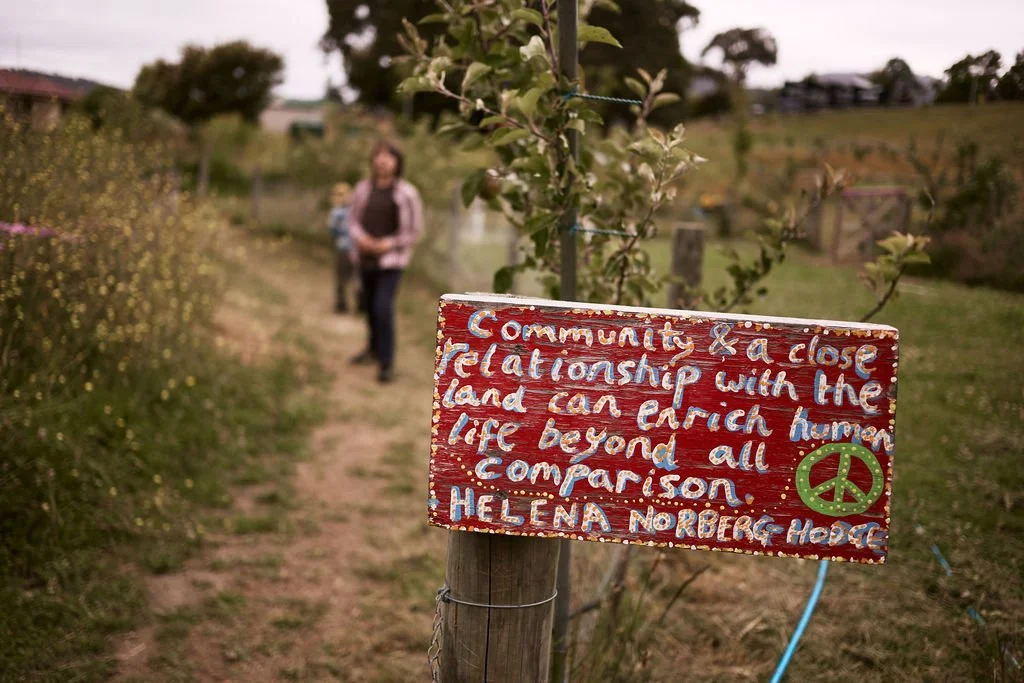
Photography by Ness Vandeburgh Photography
Others reflected on the changing nature of rural life: how industrialisation, individualism, and bureaucratic systems have fractured communal farming traditions. Yet, through seasonal gatherings, Biodynamic convivial farms, and local festivals, there are new opportunities to reconnect. The practice of Festive Agriculture, we agreed, could be a powerful way to reinvigorate land sharing, communal celebration, and learning across generations.
Bridging Biodynamics and Broader Culture
For many in the Biodynamic movement, there is a long-standing wish to make this work more visible and accessible without diluting its depth. We heard from participants who feel torn. On one hand they are deeply committed to the spiritual foundations of Biodynamics, yet unsure how to speak about it outside their own communities. Festive Agriculture may offer a gentle entry point, a way to name the joy, the relationships, and the cosmic consciousness embedded in these practices?
This is not about rebranding Biodynamics, but about opening new pathways for engagement, especially with younger generations, artists, educators, and those interested in food, culture, and ecology. If we can frame farming as both practical and festive, grounded and celebratory, it becomes a more inviting field of belonging.
The Role of Festivals and Ritual in Land Care
In our paper, we explored agricultural festivals from Japan to the Andes, from Indigenous Australian calendars to the European solstice rituals practiced on Biodynamic farms. Despite vast differences, these traditions share key themes: cosmic alignment, sacred reciprocity, seasonal awareness, and community celebration.Festive Agriculture takes inspiration from these examples. It honours planting and harvesting not just as labour, but as opportunities for joy, storytelling, feasting, and song. In doing so, it rekindles the human side of land care, not just as a responsibility, but as a form of belonging and shared purpose.
Events like the Cygnet Crop Swap, Bio-Dynamics Tasmania field days or the seasonal festivals and workshops at Magical Farm Tasmania demonstrate that even in our modern world, agricultural festivals still hold a place. They offer space to exchange food and knowledge, and to remember that food is not a commodity, it’s a relationship.
A Call to Celebration
In closing, Festive Agriculture is both an ancient memory and a future possibility. It offers a way to bring Steiner’s vision of the farm as a living organism into dialogue with wider cultural movements for ecological renewal, food sovereignty, and spiritual reconnection. What we plant in the soil matters, but so does what we plant in culture. Festivals, gatherings, stories, and rituals are vital nutrients for our communities and for the earth. By celebrating the cosmic, seasonal, and communal dimensions of farming, we may grow not only food, but a deeper joy, a stronger culture, and a future rooted in reverence.
As one participant said, “This has opened a doorway. I can feel the future pulling us toward something beautiful.” That something may well be Festive Agriculture, not a trend, but a return to something we never truly lost.
Con Viv ‘with life’ & Love,
Dr Demeter