Festive Agriculture: A Living Bridge Between Cosmos, Community, and Cultivation

By Dr Demeter | Emily Samuels-Ballantyne

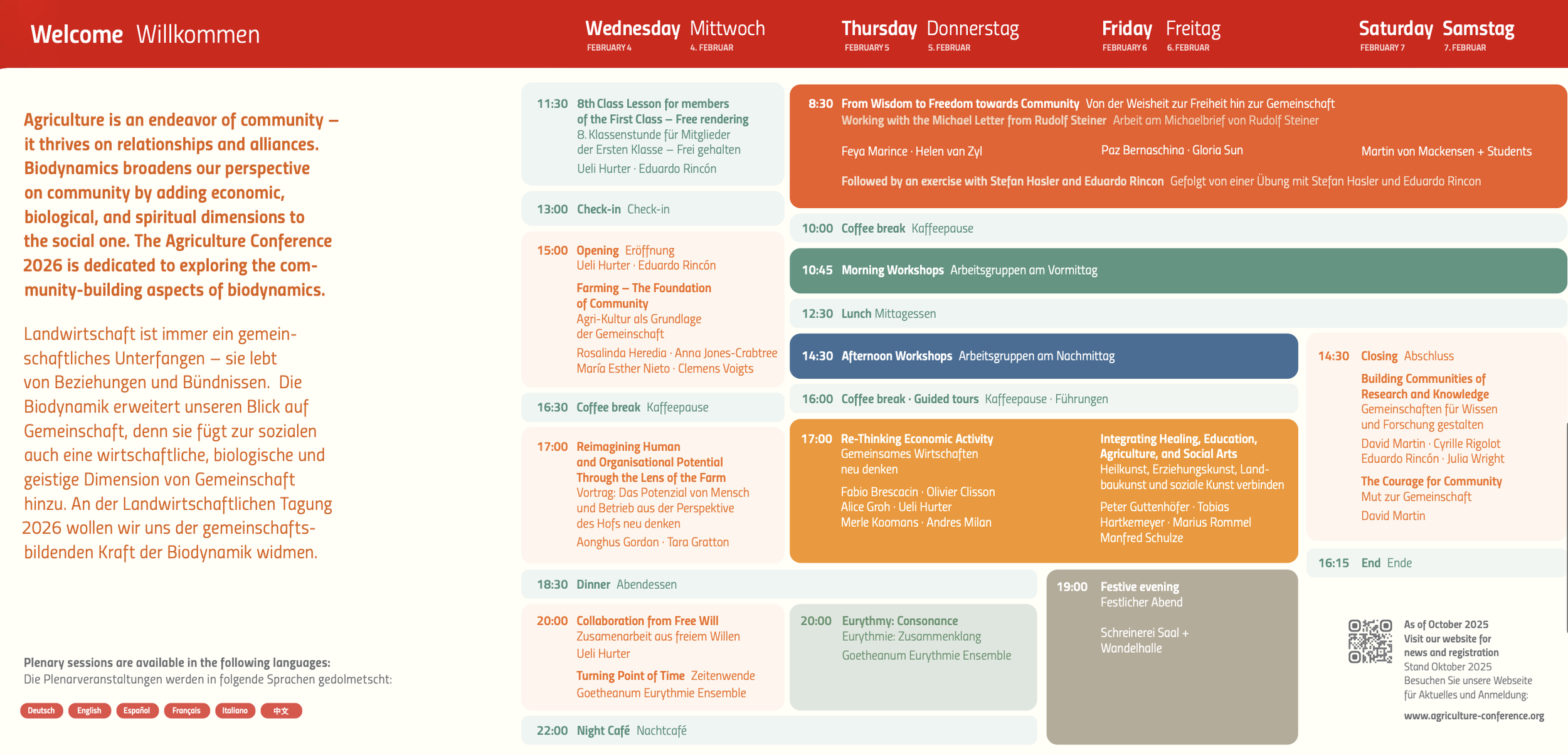
At the Agricultural Section gathering of the Spiritual Science Community of Australia in May 2025, a shared sense of joy and purpose emerged as participants explored a new-old concept: Festive Agriculture with presenters from Bio-dynamics Tasmania Julia Yelton, Kirsten Robinson and myself. Rooted in Biodynamic principles and enriched by global traditions and cosmic wisdom, this term resonated deeply with the conference participants, sparking stories, laughter, memories of intergenerational farming, and visions for a more connected future through sacred agriculture.

In our presentation, we introduced the ABC of Festive Agriculture: Anthroposophy as the spiritual foundation, Biodynamics as the living method, and Community as the heart of celebration and connection. Together, these three elements weave a holistic approach to farming that honours the cosmic, the earthly, and the social as one living whole.

The phrase Festive Agriculture offered something unexpected: accessibility. One participant joked, “I finally have a way to tell my mates what I do “Festive Agriculture” and they’ll get it. That comment echoed throughout the room, highlighting a central theme of our workshop: while Steiner’s Biodynamic agriculture holds profound spiritual and cosmological wisdom, the language around it often remains opaque or misunderstood in wider circles. Festive Agriculture may be one way to gently bridge this gap?

What Is Festive Agriculture?

Festive Agriculture, as presented in our paper, is not a method or a system, but a living relationship with the land. It is the weaving together of cosmic rhythms, seasonal cycles, and community life into an integrated whole. It calls in both ancient and the emergent, in many ways unseen worlds in our materialistic times. Drawing on Biodynamic practices, First Nations sky knowledge, and traditional harvest celebrations around the world.

It is not just about growing food, rather it is about celebrating life, honouring the land, ancestors, and future generations. It invites us into rituals and festivals that acknowledge both the practical and the sacred. In Biodynamic farming, this includes planting by moon phases and observing planetary influences. In other traditions, it might involve singing to seeds, feasting with neighbours, or offering thanks to the spirits of place.

Workshop Reflections: Intergenerational Threads

During the workshop, participants shared stories of how Festive Agriculture awakened memories of intergenerational knowledge-sharing, farm life with grandparents, and rural customs nearly forgotten. Several spoke of the need to rekindle these threads, passing down more than just skills, but also the cultural and spiritual sensibility that once animated farming life.
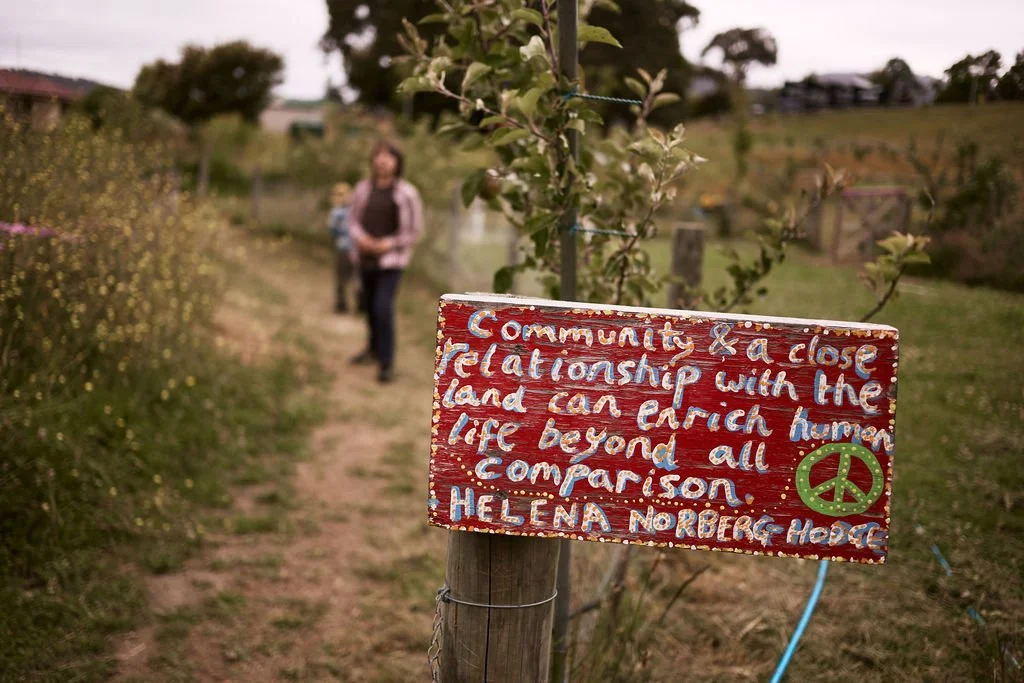
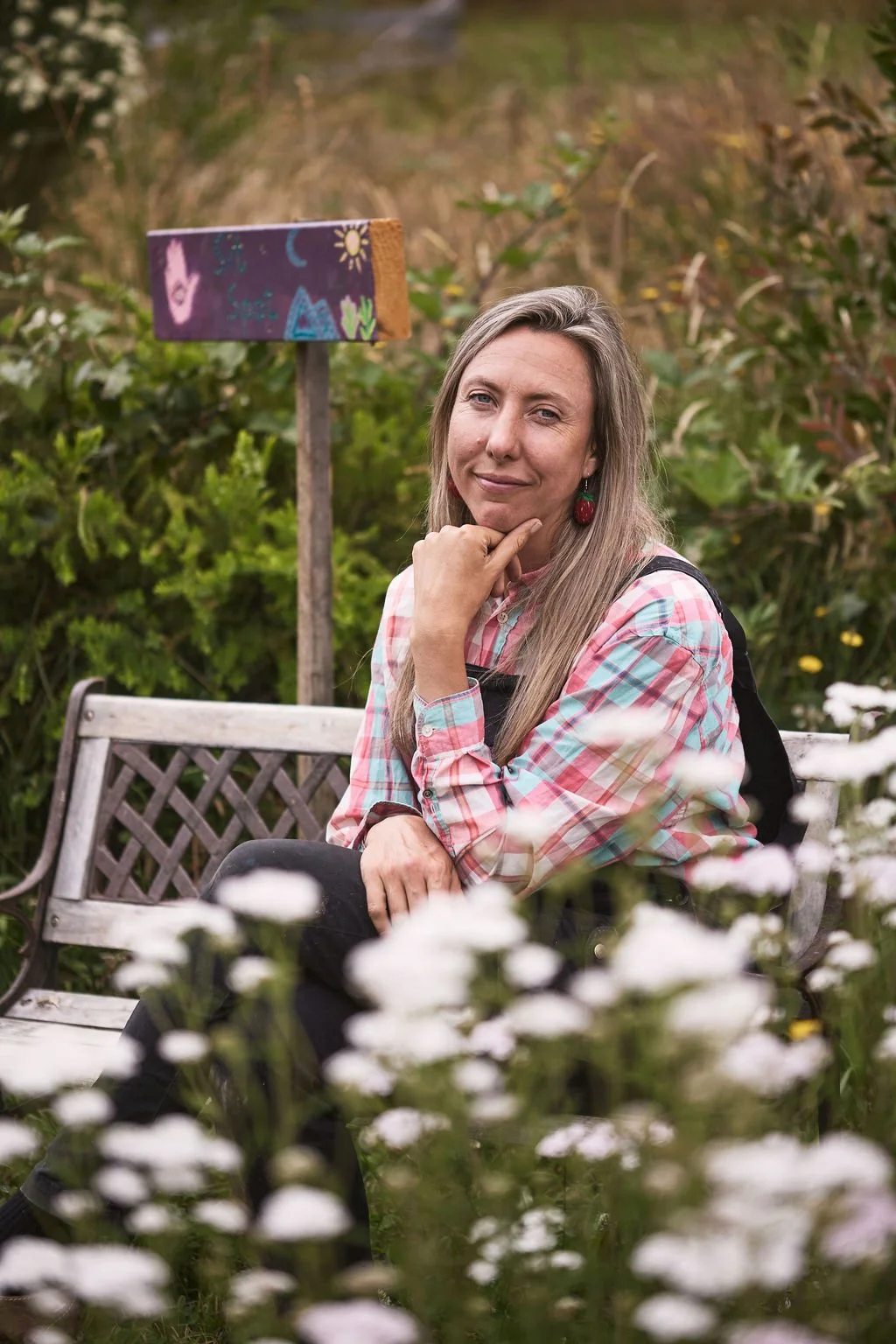
Photography by Ness Vandeburgh Photography

Others reflected on the changing nature of rural life: how industrialisation, individualism, and bureaucratic systems have fractured communal farming traditions. Yet, through seasonal gatherings, Biodynamic convivial farms, and local festivals, there are new opportunities to reconnect. The practice of Festive Agriculture, we agreed, could be a powerful way to reinvigorate land sharing, communal celebration, and learning across generations.

Bridging Biodynamics and Broader Culture

For many in the Biodynamic movement, there is a long-standing wish to make this work more visible and accessible without diluting its depth. We heard from participants who feel torn. On one hand they are deeply committed to the spiritual foundations of Biodynamics, yet unsure how to speak about it outside their own communities. Festive Agriculture may offer a gentle entry point, a way to name the joy, the relationships, and the cosmic consciousness embedded in these practices?

This is not about rebranding Biodynamics, but about opening new pathways for engagement, especially with younger generations, artists, educators, and those interested in food, culture, and ecology. If we can frame farming as both practical and festive, grounded and celebratory, it becomes a more inviting field of belonging.

The Role of Festivals and Ritual in Land Care

In our paper, we explored agricultural festivals from Japan to the Andes, from Indigenous Australian calendars to the European solstice rituals practiced on Biodynamic farms. Despite vast differences, these traditions share key themes: cosmic alignment, sacred reciprocity, seasonal awareness, and community celebration.Festive Agriculture takes inspiration from these examples. It honours planting and harvesting not just as labour, but as opportunities for joy, storytelling, feasting, and song. In doing so, it rekindles the human side of land care, not just as a responsibility, but as a form of belonging and shared purpose.

Events like the Cygnet Crop Swap, Bio-Dynamics Tasmania field days or the seasonal festivals and workshops at Magical Farm Tasmania demonstrate that even in our modern world, agricultural festivals still hold a place. They offer space to exchange food and knowledge, and to remember that food is not a commodity, it’s a relationship.

A Call to Celebration

In closing, Festive Agriculture is both an ancient memory and a future possibility. It offers a way to bring Steiner’s vision of the farm as a living organism into dialogue with wider cultural movements for ecological renewal, food sovereignty, and spiritual reconnection. What we plant in the soil matters, but so does what we plant in culture. Festivals, gatherings, stories, and rituals are vital nutrients for our communities and for the earth. By celebrating the cosmic, seasonal, and communal dimensions of farming, we may grow not only food, but a deeper joy, a stronger culture, and a future rooted in reverence.

As one participant said, “This has opened a doorway. I can feel the future pulling us toward something beautiful.” That something may well be Festive Agriculture, not a trend, but a return to something we never truly lost.


Con Viv ‘with life’ & Love,

Dr Demeter
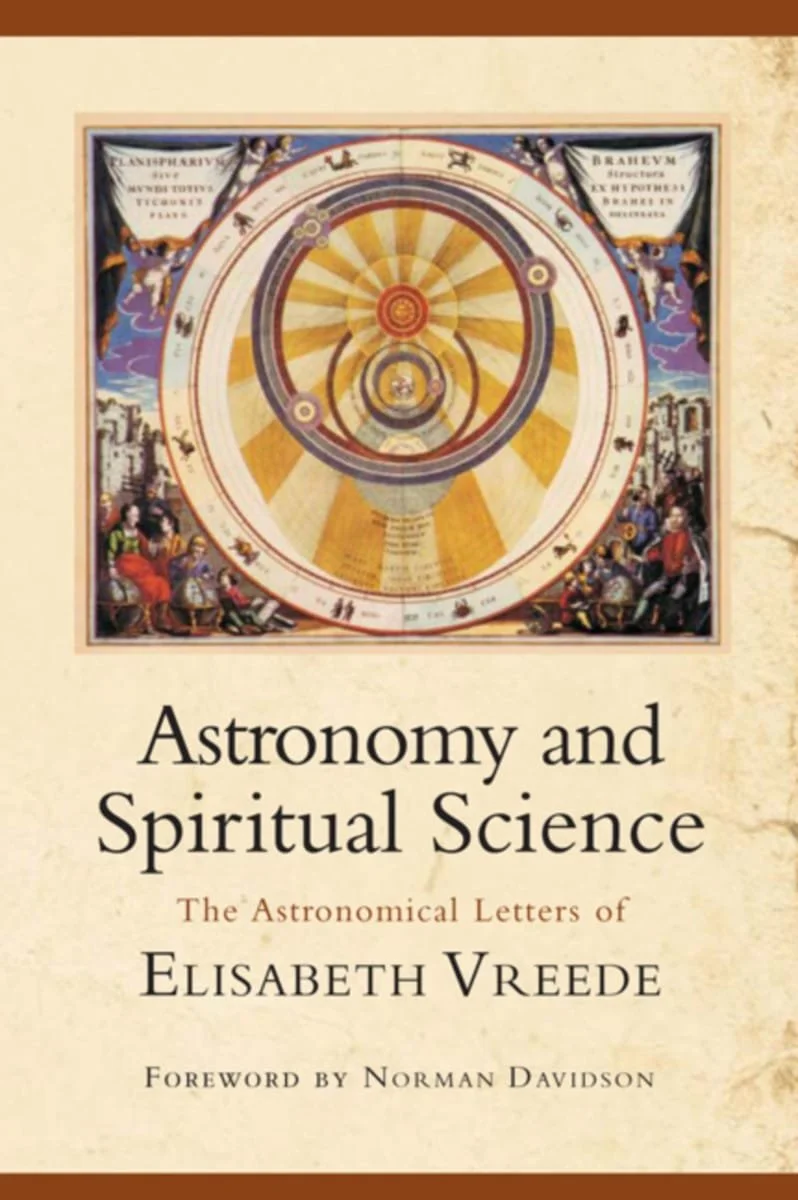
Review on the work of Elisabeth Vreede: Keeper of the Stars and initiator of the Goetheanum Archive

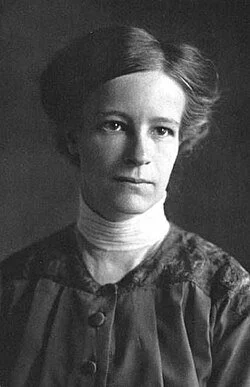
Elisabeth Vreede (1879–1943) deserves to be celebrated for her phenomenal: a mathematician and astronomer who helped give anthroposophy a backbone of disciplined thinking, and a cultural guardian who quietly built the Goetheanum’s library and archive so the movement could remember itself with accuracy.

She was appointed head of the Mathematical-Astronomical Section of the School of Spiritual Science at the Goetheanum in 1923, and her life shows how the “cosmic” in anthroposophy is not meant to be dreamy, but exact: an education of perception, rhythm, and responsibility. Maths and science is spiritual, thanks to her.

When people ask what her main work is, I point to two streams:

1) The first is her sustained, practical teaching: between 1927 and 1930 she wrote monthly “astronomical letters” that bridge modern astronomy and classical astrology in the light of spiritual science; these were later published in English as Astronomy and Spiritual Science: The Astronomical Letters of Elisabeth Vreede.

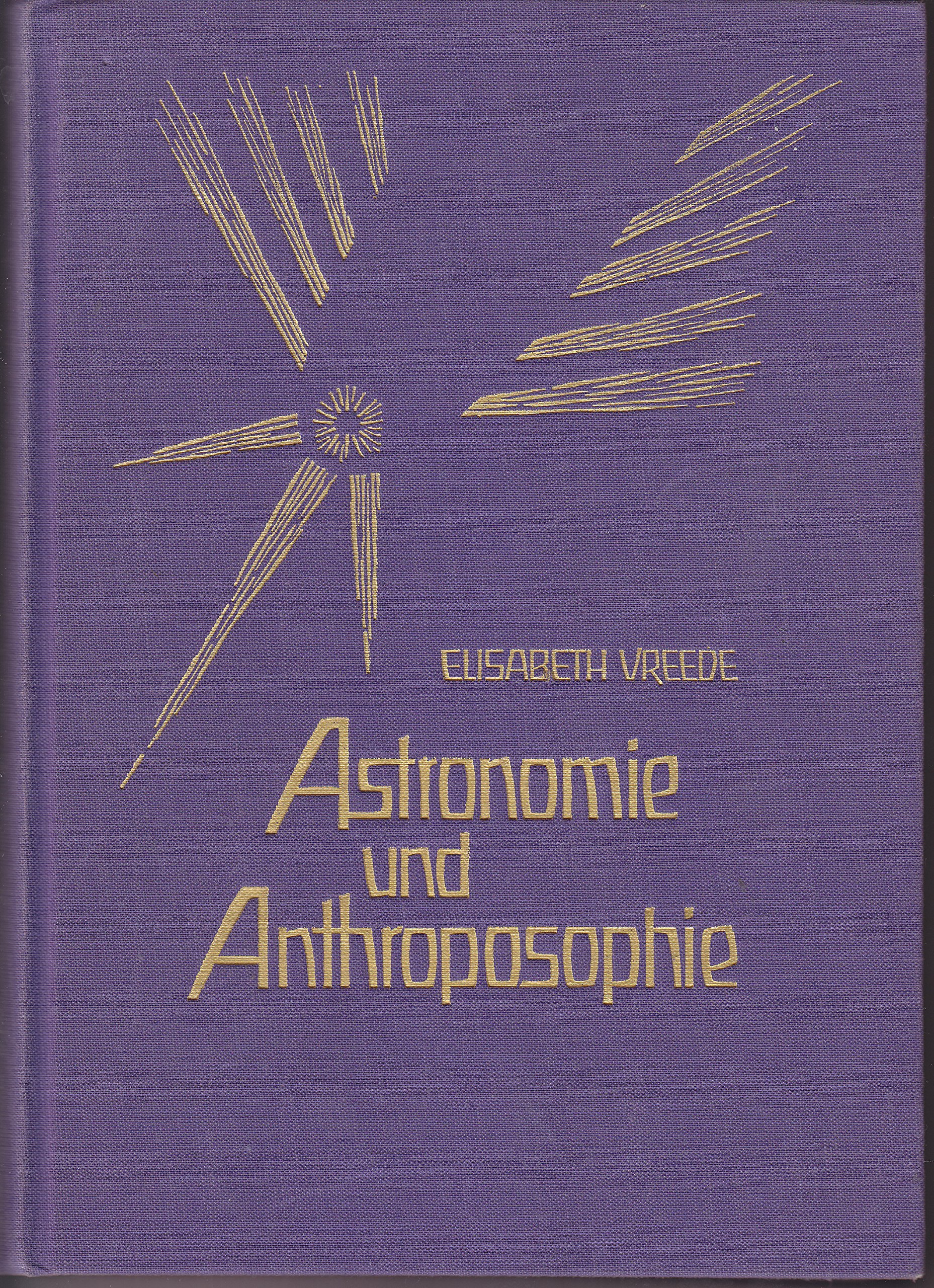
2) The second stream is the German-language legacy, including Astronomie and Anthroposophie (Verlag am Goetheanum, Dornach) and the biographical work Elisabeth Vreede: Ein Lebensbild by M. P. van Deventer, which shines light on the moral texture of her life.

Portrait found on Wikimedia

Her story carries a sober lesson for any community that claims spiritual ideals. In 1935 she was removed from leadership and cut off from the very observatory and archives she had helped assemble, and her last years became increasingly isolated; she died in Ascona, Switzerland, in 1943.

To honour Elisabeth Vreede is an ethical act: remembering a woman who served the future through precision, and asking whether our own communities can learn to receive such clear-thinking devotion with the warmth it deserves.

With life ‘con viv’ and Love,

Dr Demeter

You Never Farm Alone: Collaboration from Free Will, and the cultural farms of the future

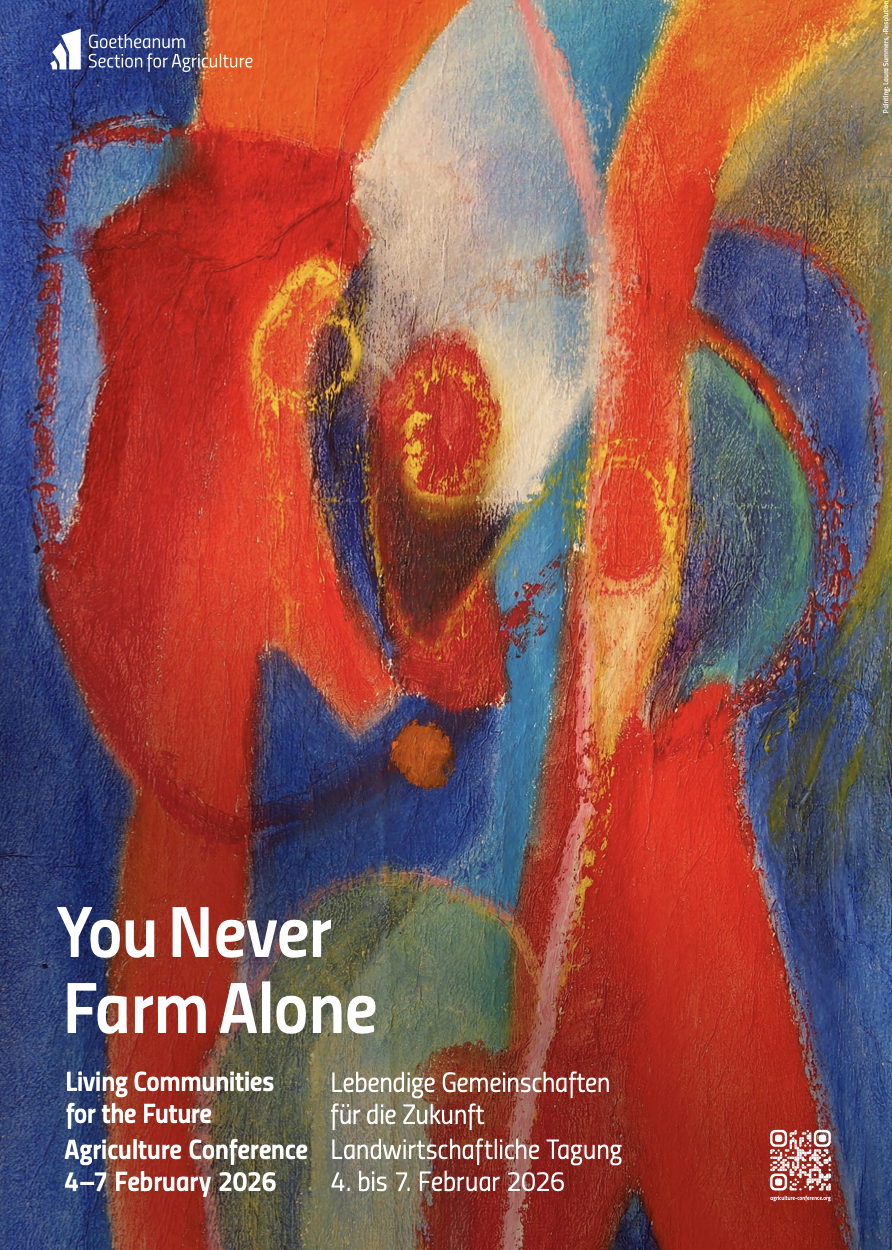
Feature on the Agriculture Conference in Dornach, Switzerland at the Goetheanum, 4–7 February 2026.

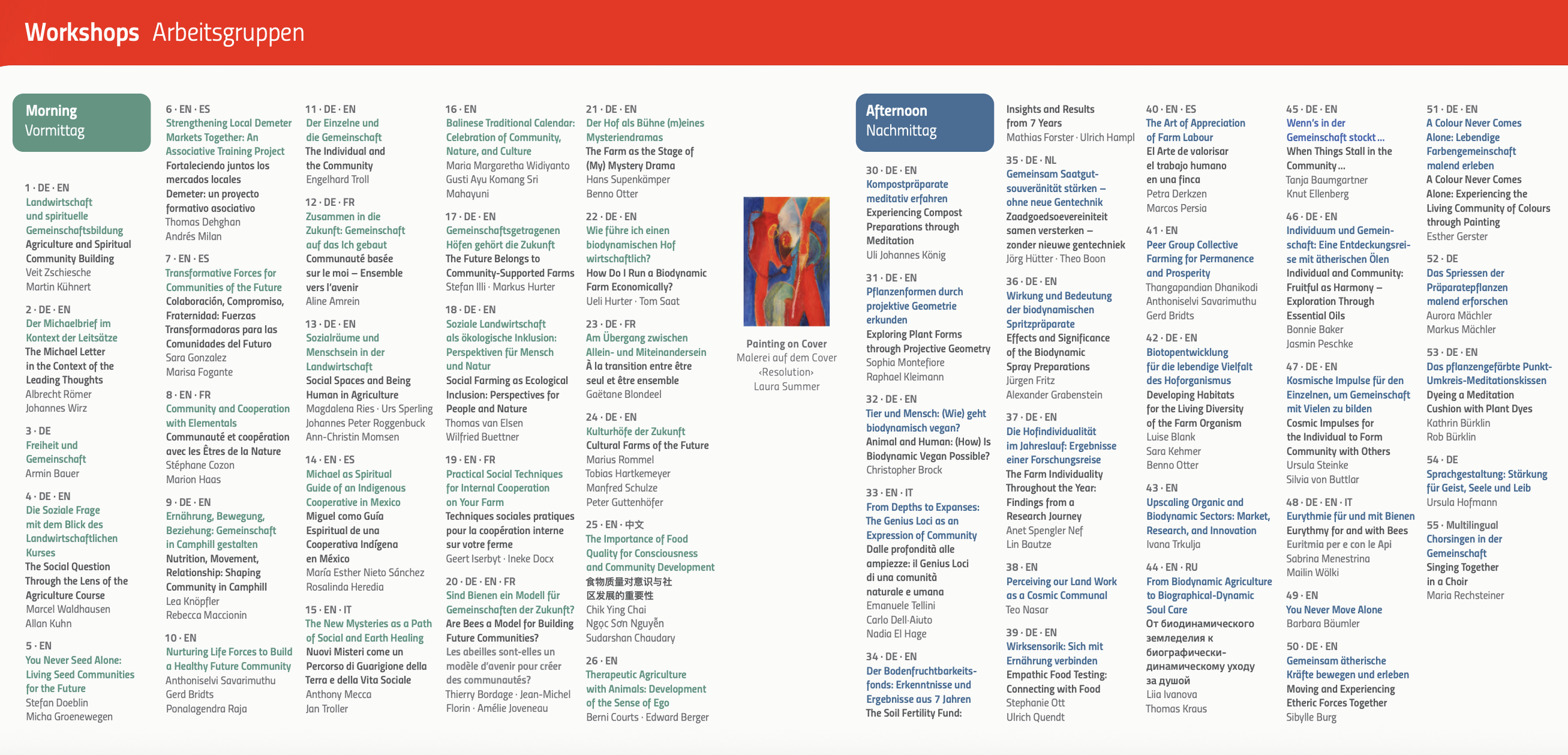
We gathered at the Goetheanum for the agriculture conference titled You Never Farm Alone, and I left feeling that what was being cultivated was not only agriculture, but relationship and a praxis of courage. Approximately 750 people came from every continent, yet the gathering felt intimate. Each morning began with Michael Letters readings, conversation, and a strengthening eurythmy practice with Stefan Hasler and Eduardo Rincon. In anthroposophic terms it felt like the “I” learning to stand inside community, without losing warmth. On one of the last evenings we all joyfully danced together in the large hall, which was such a delight.

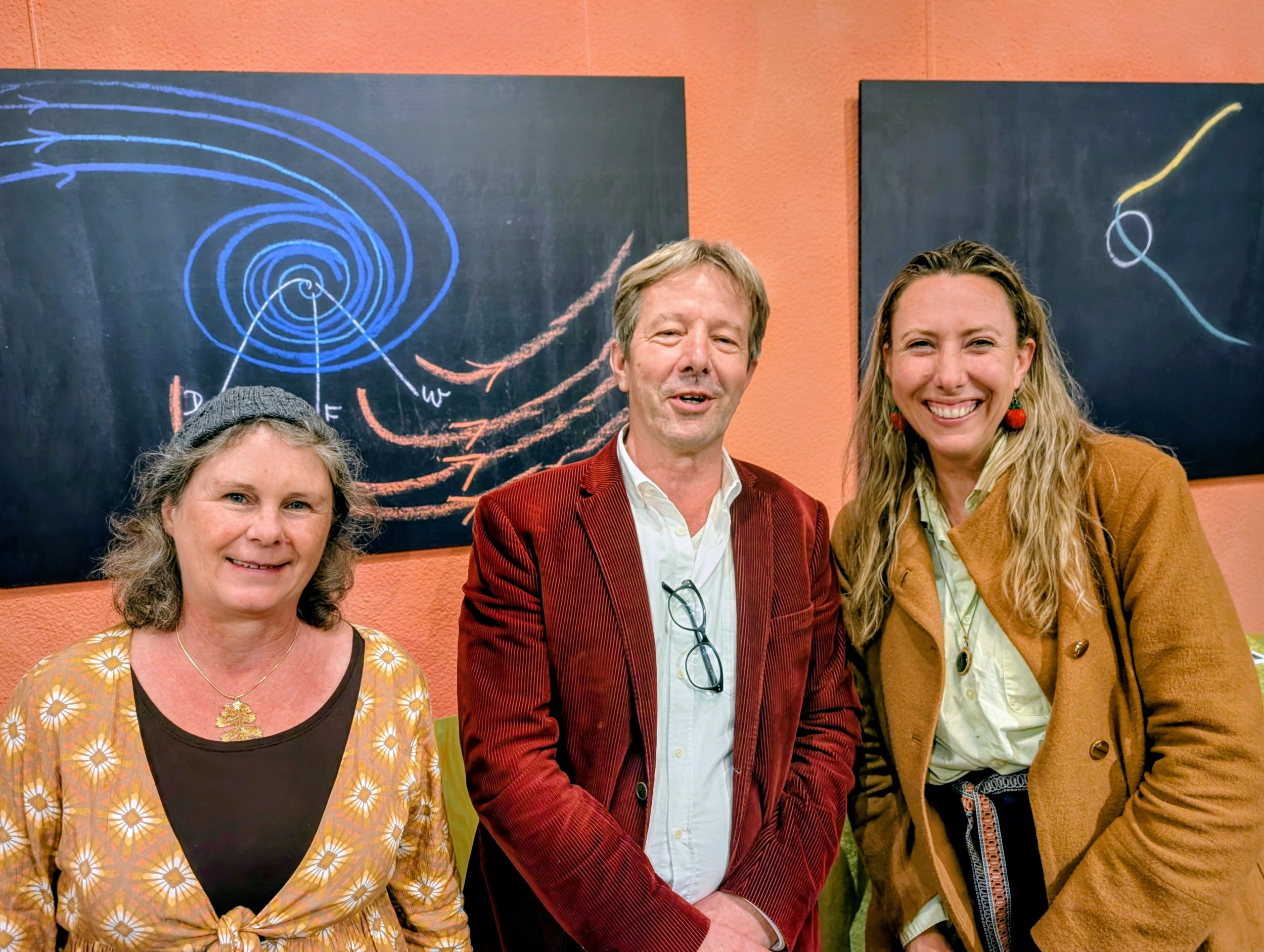
Sophia Montefiore, Ueli Hurter and Emily Samuels-Ballantyne at the Goetheanum, Switzerland, in front of Rudolf Steiner’s chalkboard drawings, an atmosphere of imagination, study, and practice. Agriculture Conference ‘You Never Farm Alone’ 2026.

I attended the Cultural Farms of the Future workshop three days in a row throughout the conference. Its question was simple, courageous, and ambitious: how can farmland become a place where living communities are formed, where healing, education, agriculture and the social arts are integrated as one cultural organism. We spoke of farms as places that can hold learning, care, research, celebration, and good work, and we returned repeatedly to economics: how might we organise farm activity so value circulates rather than extracts, so farms can host people without burning out farmers, and so the social life around the farm becomes an organ of the farm itself.

The same group who ran the Cultural Farms workshop also led a panel titled Our Work with Life: Working with Life in Agriculture, Medicine, and Pedagogy, weaving integrative medicine, education, and biodynamic agriculture into one conversation. Berni Courts (Ruskin Mill Trust) spoke of education through meaningful work. Dr Martin-Günther Sterner brought the human organism into view, linking digestion, rhythm and immunity with social environment. Tobias Hartkemeyer (CSA farm Pente) spoke of co-responsibility and associative forms that make community agriculture real. Ruben Segers and Antoinette Simonart (De Kollebloem, Belgium) offered a living example of a farm as a cultural place where production and pedagogy belong together. The thread running through the conversation was practical reverence: life can be enriched through the farm organism.

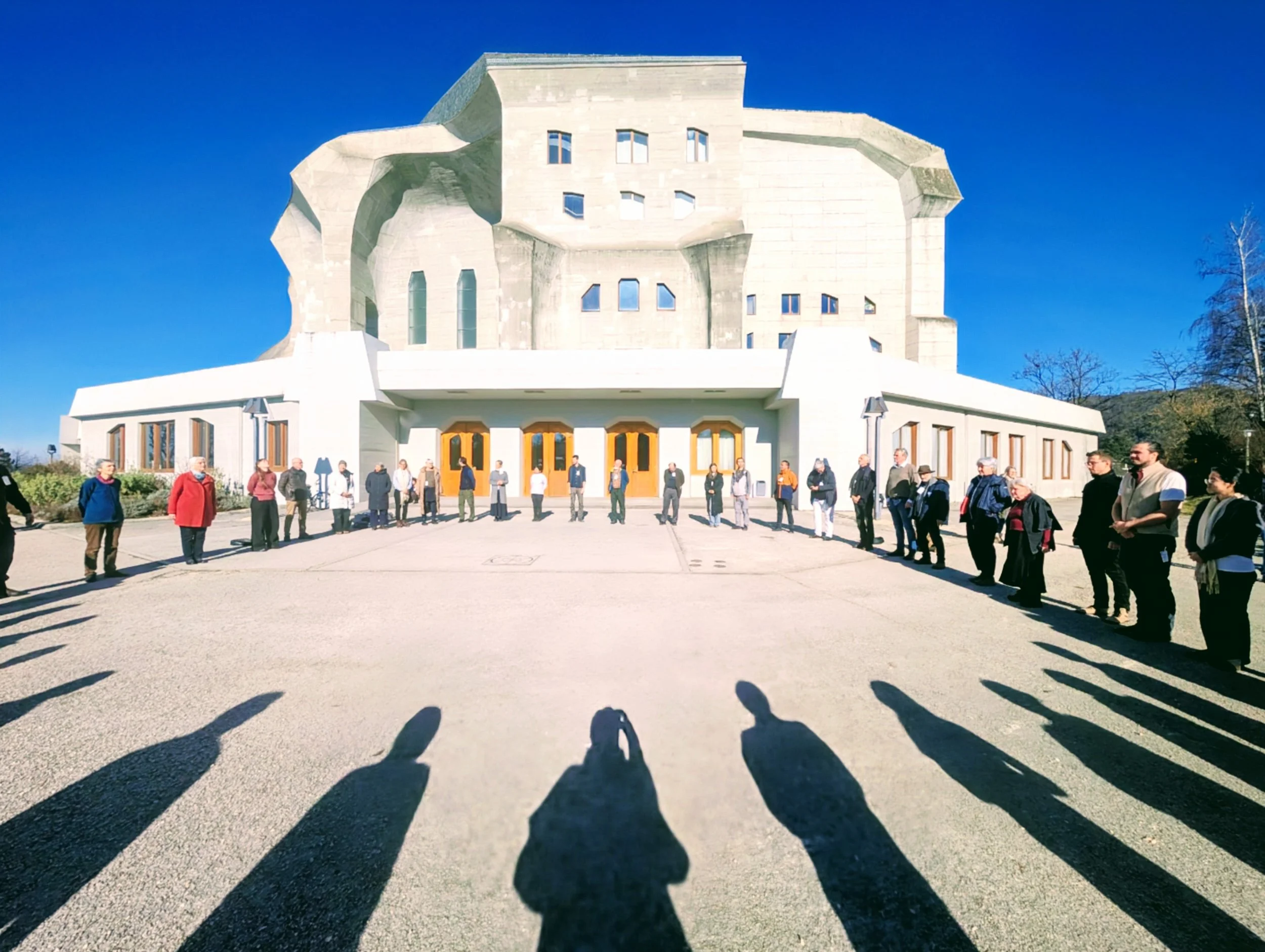
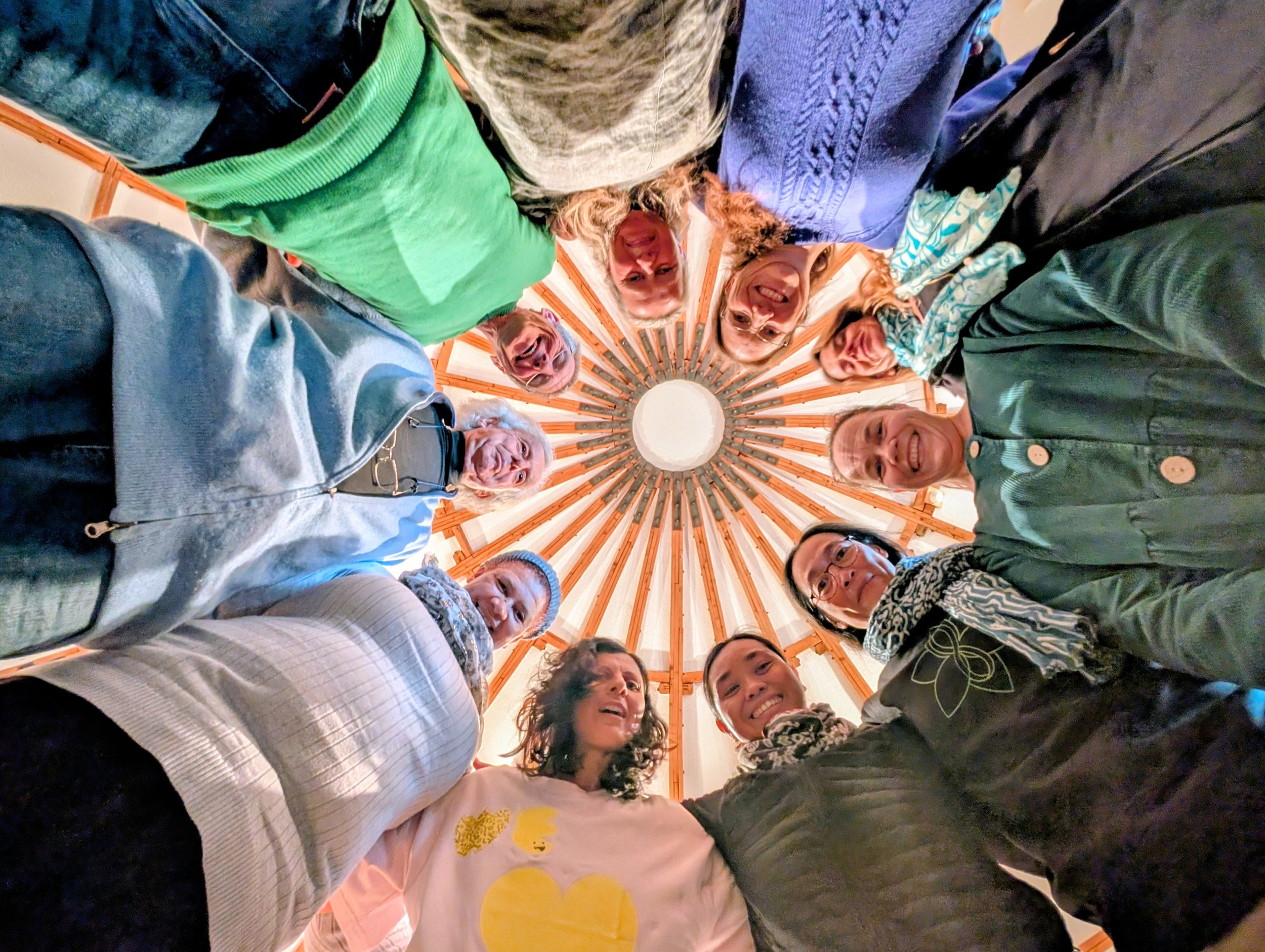
Emily Samuels-Ballantyne in a eurythmy circle as part of the Cultural Farms of the Future workshop at the Goetheanum, during the Agriculture Section conference We Don’t Farm Alone, Switzerland. Photography by Emily Samuels-Ballantyne/Dr Demeter

Ueli Hurter, in his lecture on “Free Will,” named Collaboration from Free Will as a practical social principle: not compliance, not consensus-by-fatigue, but creating the conditions for people to choose the work. Then, when the weather turns (or a moment or situation tightens), cooperation comes as a willing and shared response rather than something forced. He drew on Kepler’s music of the spheres as an imagination for lawful relationship, and the evening concluded with the Turning of Time stanza from Steiner’s Foundation Stone Meditation: a Michaelic request to meet the present with clearer thinking and warmer hearts. In essence, technique alone won’t meet the future of agriculture; what is required is a new warmth and truthfulness between people, and this takes Michaelic courage to discover.

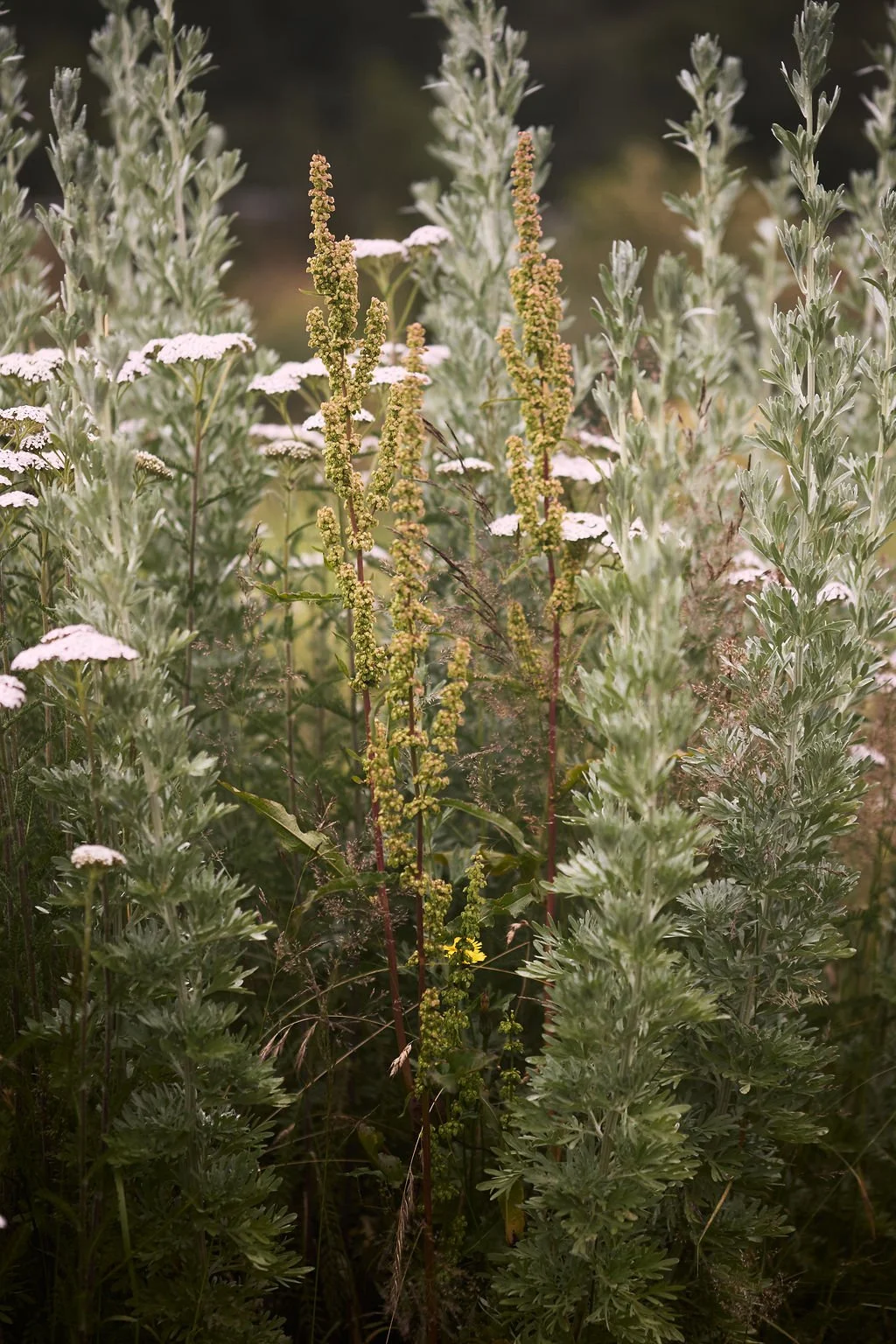
After Ueli’s lecture I found myself in conversation with Eduardo Rincon and turning to a small, almost disarmingly simple gesture inspired by Ueli’s lecture: to make a cup of yarrow tea! I was seeking to give his talk a Keplerian imagination through this simple idea. This Keplerian imagination is a way of perceiving that seeks the lawful relationships at work within both the cosmos and the commonplace, and trusts that these relationships can be consciously participated in, somewhere tangible to rest.

If harmony is experienced as right relationship, then we require simple, repeatable gestures that tune the human being toward listening. Yarrow offers such a gesture. As a plant long associated with boundaries, mediation, and weaving, it works quietly with the organs of the body. Likewise as we know it is quite an integrator in bio-dynamics practices for the soil and the overall farm organism. In the human experience, by steeping, waiting, and drinking, one practises a different tempo, less reaction, more receptivity; less assertion, more attunement.

In the old language of correspondences, yarrow carries a Venus quality: the principle of relationship, balance, and heart-centred communication. Through such a plant, the planetary is not abstract but intimate. The cosmos is not elsewhere; it is participating. And so a simple cup of tea becomes a way of inviting lawful order, warmth, coherence, reciprocity, into the shared field of human conversation and experiences. In this way, plants are not passive background to human development, but living partners in our co-evolution, quietly shaping the conditions through which we refine perception, relationship, and consciousness.

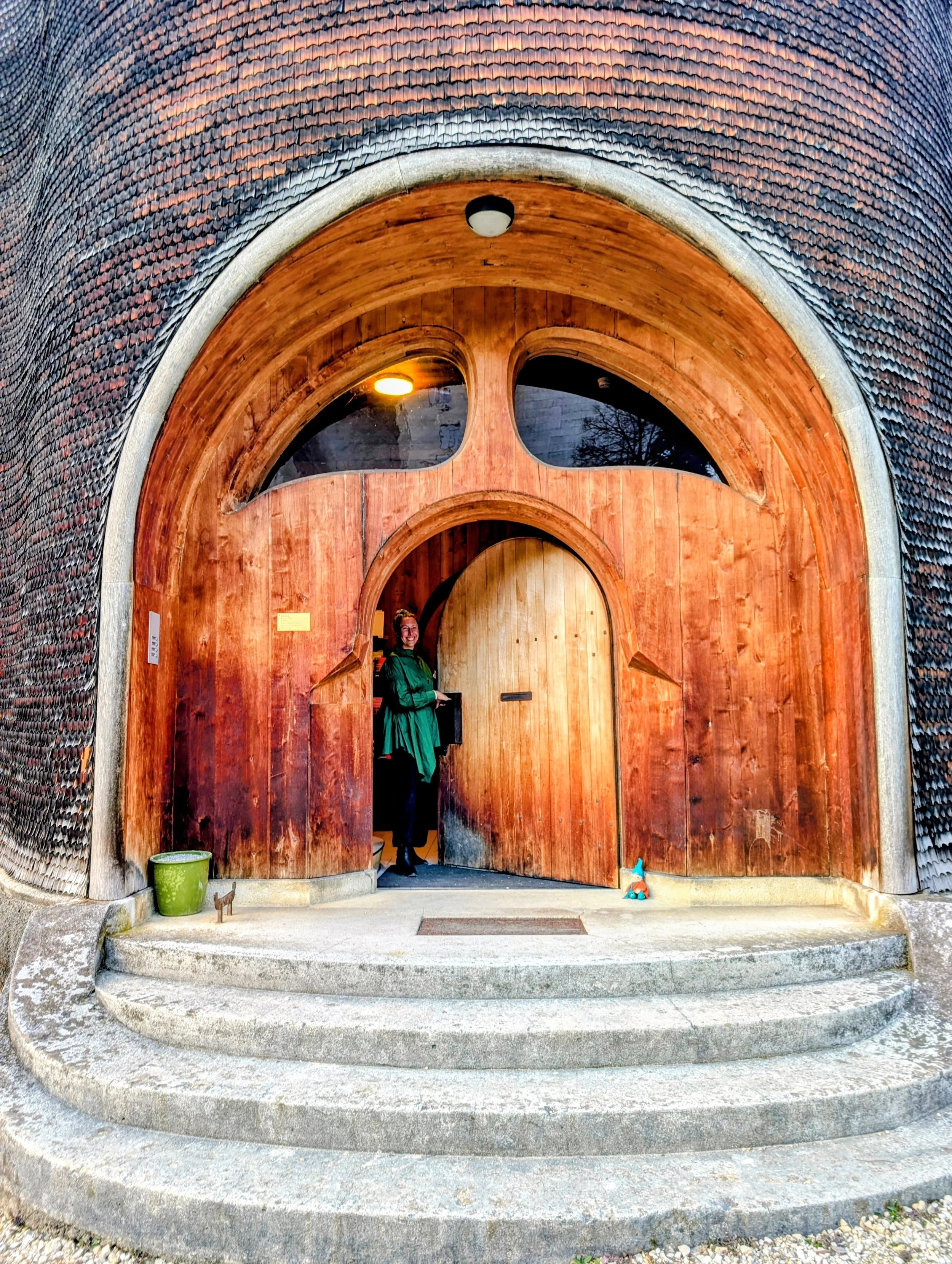
Emily Samuels-Ballantyne at the Agriculture Section front door ‘double dome’. Photography by Evelyn

Insight and reflection questions for readers in Tasmania and beyond:
Where in your region could a cultural farm take root, not as a venue, but as a living place for learning and healing?
What would it mean to design a farm gate as a civic doorway?
Which institutions could become allies, and which habits of control would need to soften into trust?
What would you change if your measure of success included soil, children, elders, microbes, and local stories?
Who are your collaborators from free will, and how will you care for those relationships when pressure rises?

Sevenfold Learning Course Participants at the Agriculture Section building, Photography by Emily Samuels-Ballantyne

Next year’s conference will focus on the biome and nutrition, and I return to our island with renewed impulse: to weave festive agriculture and convivial farming into life, so more people can access biodynamics and culture can be reinvigorated through land connection, one honest relationship at a time. May this impulse become practice in homes, councils, and markets.

With life ‘Con Viv’ and Love,

Dr Demeter

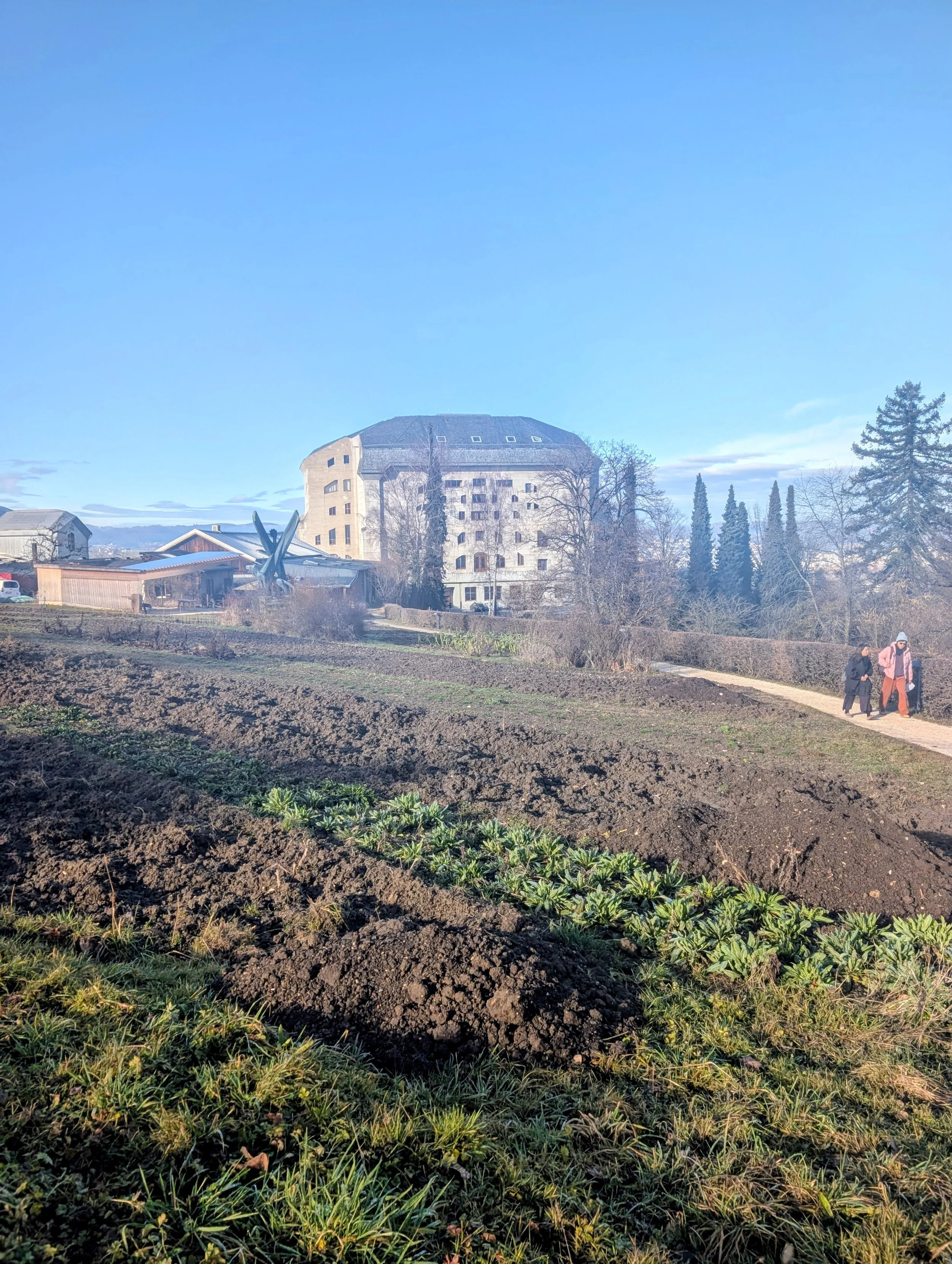
The BD Farm in the foreground, the new preparations storage building and the Goetheanum in the background. Photo: Emily Samuels-Ballantyne

First reflection on the 2026 Goetheanum Agriculture Conference

The 2026 Goetheanum Agriculture Conference has now closed, and I am sitting with a quiet, full heart. I will share photos and deeper reflections in time, and as Dr Demeter I have been in conversation with many extraordinary people here, farmers, researchers, doctors, philosophers, scientists, herbalists, compost makers, and quiet cultural stewards. There are stories coming. For now, this is a small field note from within the experience.

Dr Demeter / Emily Samuels-Ballantyne at Magical Farm Tasmania, just prior for departing for the 2026 Goetheanum Conference in Dornach Switzerland. Photography by Ness Vandeburgh Photography

People from forty-six countries gathered around a shared devotion: care for land, life, and the invisible relationships that make fertility possible. Across languages and climates, I felt a deep Con Viv truth alive, that food systems are not mechanical supply chains, but living cultural ecosystems shaped by soil, story, community, and cosmos.

Compost was spoken about as relationship, not waste management. Herbal preparations were described with reverence…. Yarrow, chamomile, nettle, oak bark, and valerian were held as mediators between Earth and sky. Many people here have simply followed their hearts into this work, often quietly, often without recognition, because the land asked them to.

Again and again, the conference returned to an ancient remembering: agriculture lives inside a cosmic conversation. Rudolf Steiner spoke of earthly life as inseparable from cosmic rhythms, and here that knowing felt practical, embodied, and quietly radical. I was also reminded of Johannes Kepler’s Music of the Spheres, and of Elisabeth Vreede’s work carrying forward the understanding that the heavens are not distant observers, but participants in earthly becoming.

What moved me most was presence. People were not performing knowledge. They were living it.

If there is one thread I carry forward into Con Viv practice, policy imagination, and the Grow Small, Feed All vision, it is this: the unseen world is asking to become visible again through how we farm, design, govern, and relate.

More soon…including voices from the conference, conversations across continents, and the quiet revolution already growing in soils around the world.

Photography by Ness Vanberburgh at Magical Farm Tasmania