Review on the work of Elisabeth Vreede: Keeper of the Stars and initiator of the Goetheanum Archive

Elisabeth Vreede (1879–1943) deserves to be celebrated for her phenomenal: a mathematician and astronomer who helped give anthroposophy a backbone of disciplined thinking, and a cultural guardian who quietly built the Goetheanum’s library and archive so the movement could remember itself with accuracy.

She was appointed head of the Mathematical-Astronomical Section of the School of Spiritual Science at the Goetheanum in 1923, and her life shows how the “cosmic” in anthroposophy is not meant to be dreamy, but exact: an education of perception, rhythm, and responsibility. Maths and science is spiritual, thanks to her.
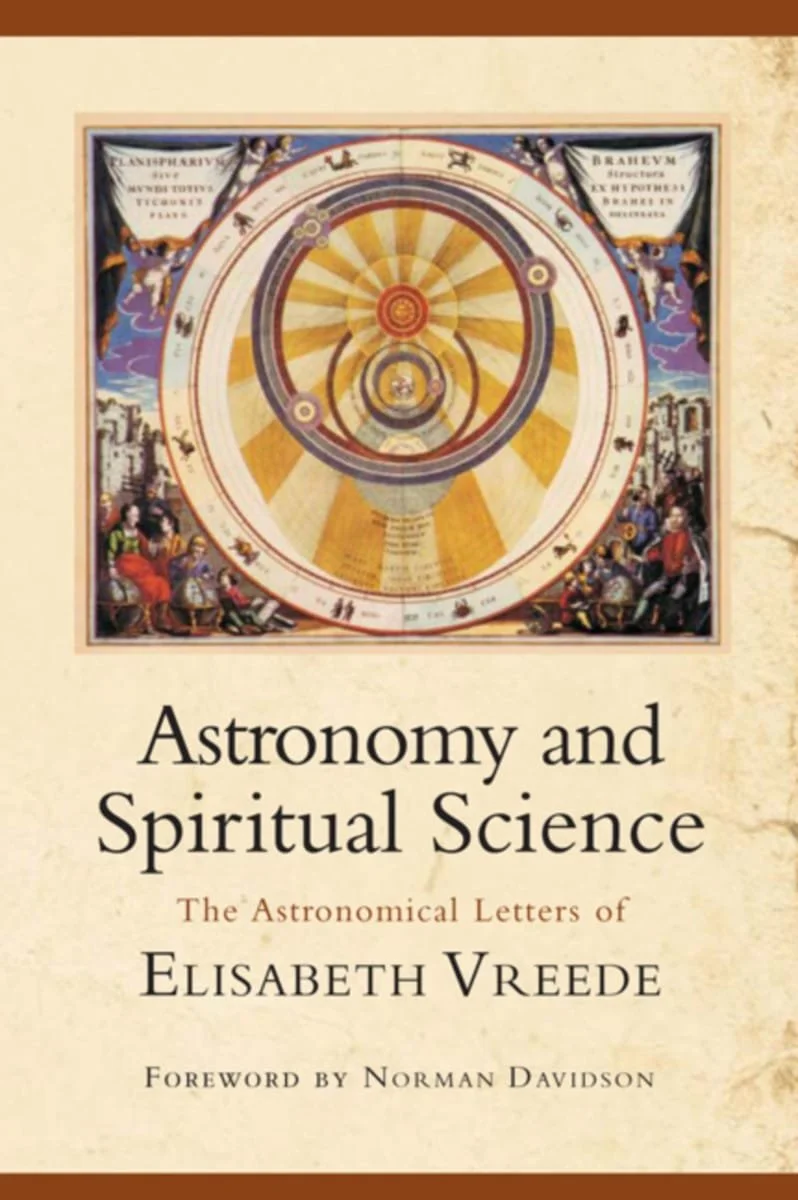
When people ask what her main work is, I point to two streams:

1) The first is her sustained, practical teaching: between 1927 and 1930 she wrote monthly “astronomical letters” that bridge modern astronomy and classical astrology in the light of spiritual science; these were later published in English as Astronomy and Spiritual Science: The Astronomical Letters of Elisabeth Vreede.

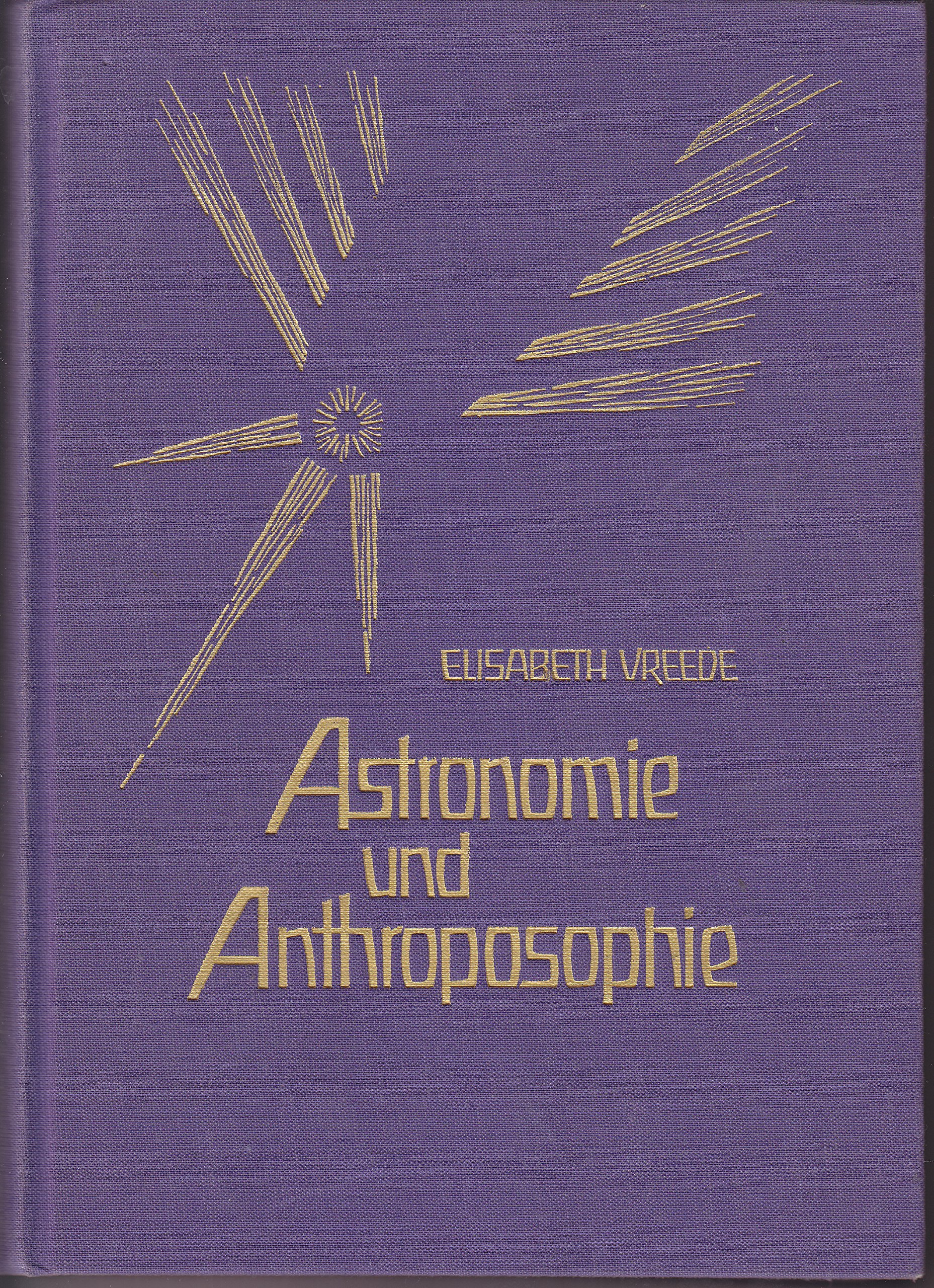
2) The second stream is the German-language legacy, including Astronomie and Anthroposophie (Verlag am Goetheanum, Dornach) and the biographical work Elisabeth Vreede: Ein Lebensbild by M. P. van Deventer, which shines light on the moral texture of her life.
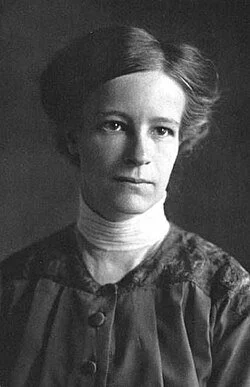
Portrait found on Wikimedia

Her story carries a sober lesson for any community that claims spiritual ideals. In 1935 she was removed from leadership and cut off from the very observatory and archives she had helped assemble, and her last years became increasingly isolated; she died in Ascona, Switzerland, in 1943.

To honour Elisabeth Vreede is an ethical act: remembering a woman who served the future through precision, and asking whether our own communities can learn to receive such clear-thinking devotion with the warmth it deserves.
With life ‘con viv’ and Love,

Dr Demeter
First reflection on the 2026 Goetheanum Agriculture Conference

The 2026 Goetheanum Agriculture Conference has now closed, and I am sitting with a quiet, full heart. I will share photos and deeper reflections in time, and as Dr Demeter I have been in conversation with many extraordinary people here, farmers, researchers, doctors, philosophers, scientists, herbalists, compost makers, and quiet cultural stewards. There are stories coming. For now, this is a small field note from within the experience.

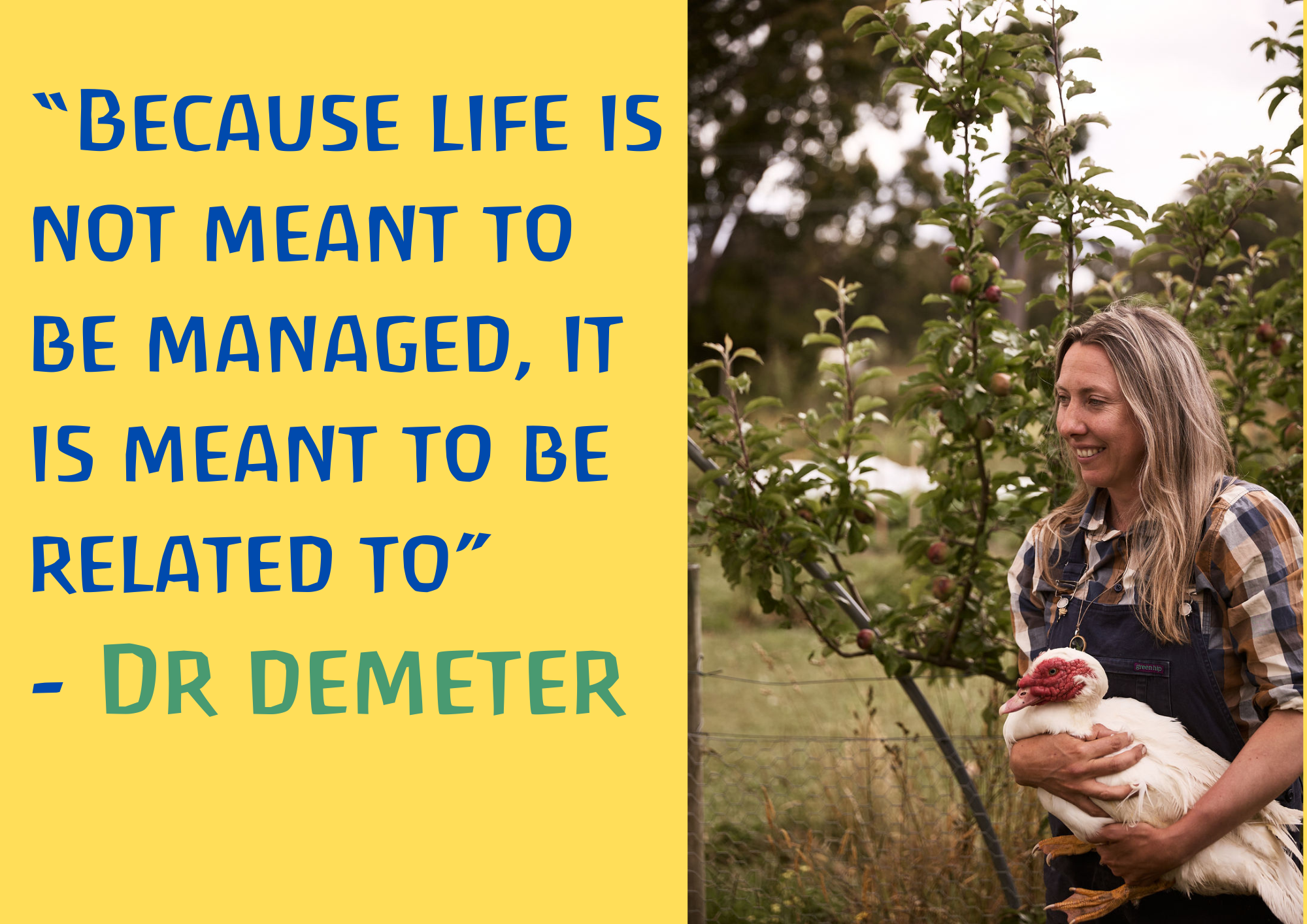
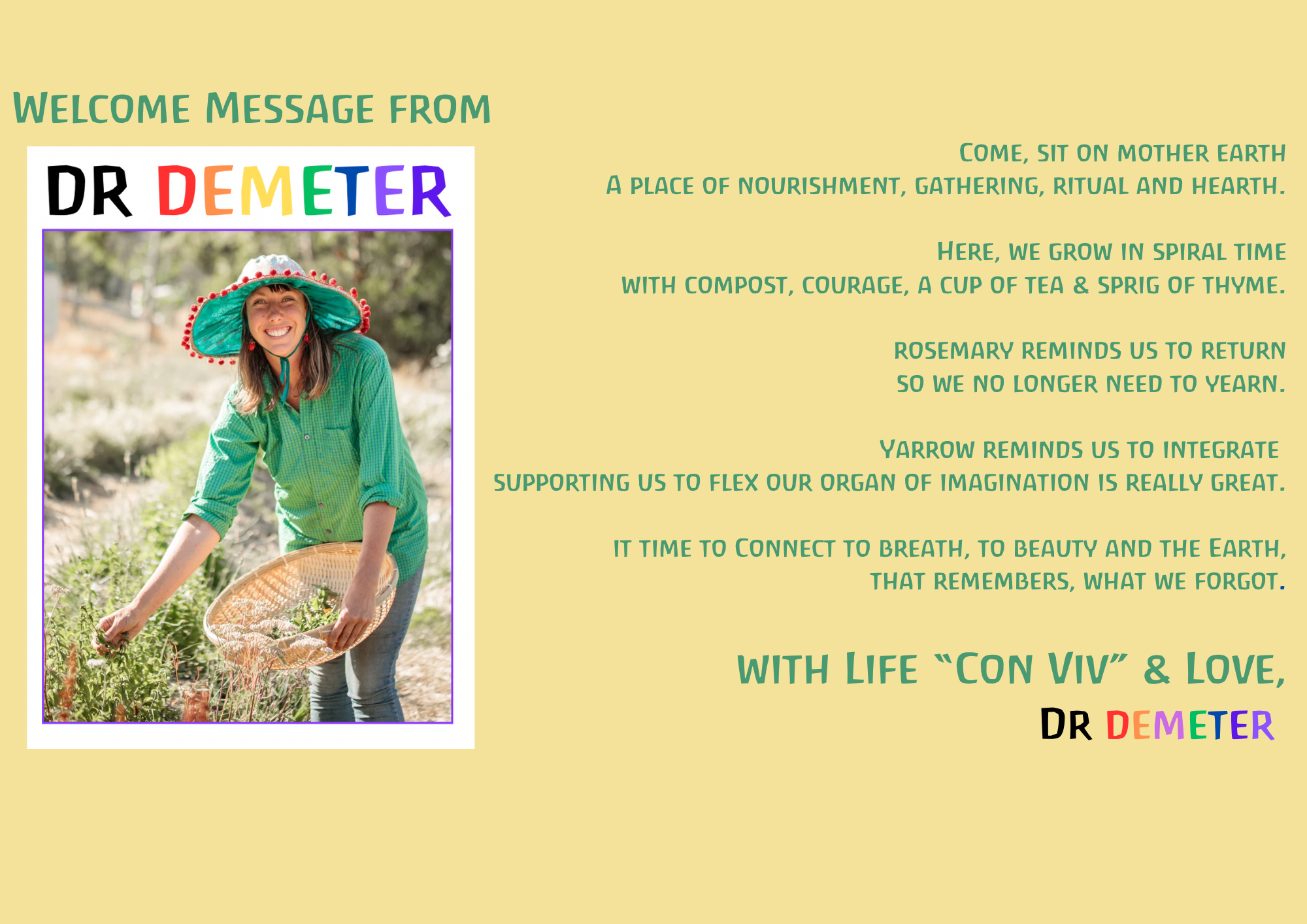
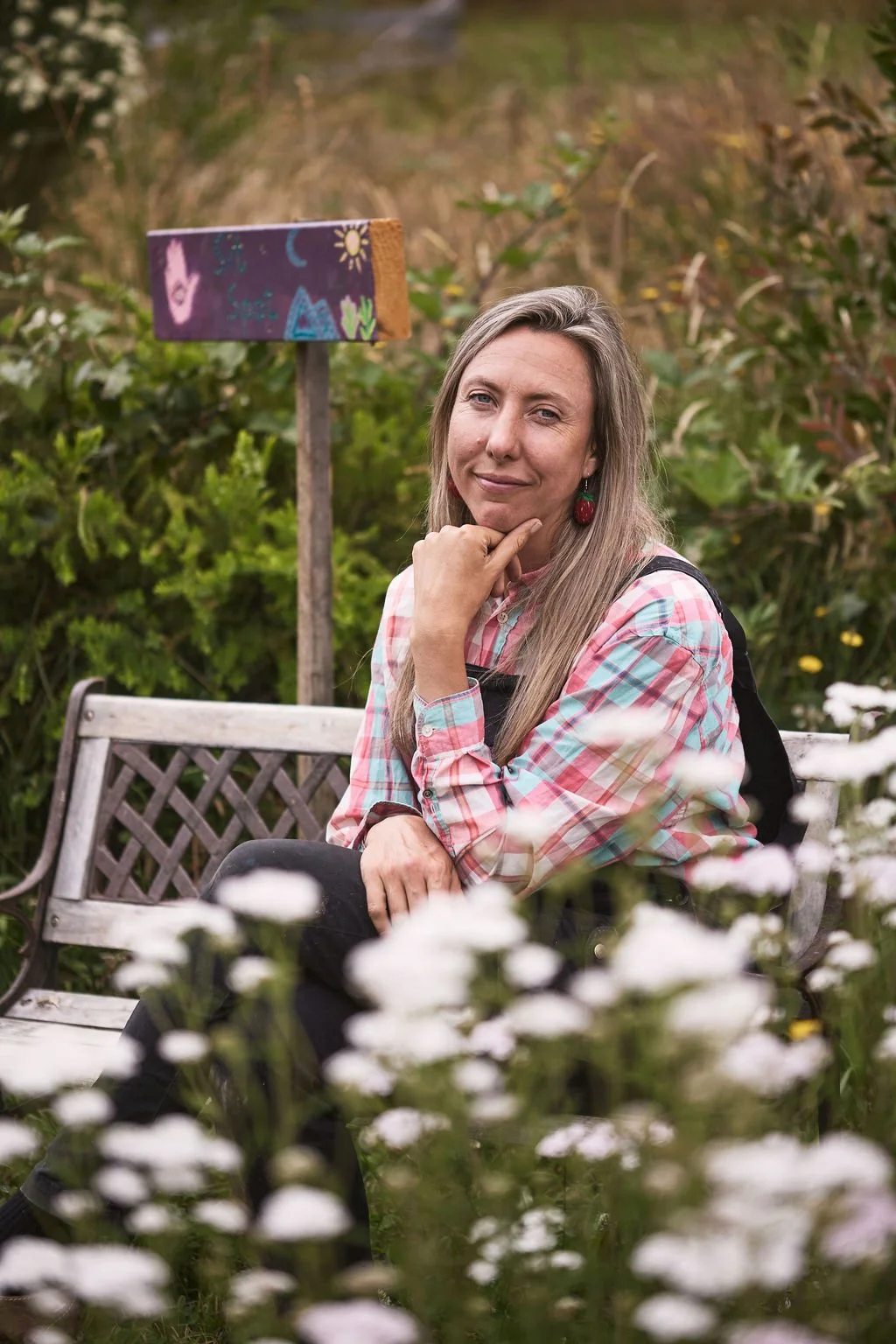
Dr Demeter / Emily Samuels-Ballantyne at Magical Farm Tasmania, just prior for departing for the 2026 Goetheanum Conference in Dornach Switzerland. Photography by Ness Vandeburgh Photography

People from forty-six countries gathered around a shared devotion: care for land, life, and the invisible relationships that make fertility possible. Across languages and climates, I felt a deep Con Viv truth alive, that food systems are not mechanical supply chains, but living cultural ecosystems shaped by soil, story, community, and cosmos.

Compost was spoken about as relationship, not waste management. Herbal preparations were described with reverence…. Yarrow, chamomile, nettle, oak bark, and valerian were held as mediators between Earth and sky. Many people here have simply followed their hearts into this work, often quietly, often without recognition, because the land asked them to.

Again and again, the conference returned to an ancient remembering: agriculture lives inside a cosmic conversation. Rudolf Steiner spoke of earthly life as inseparable from cosmic rhythms, and here that knowing felt practical, embodied, and quietly radical. I was also reminded of Johannes Kepler’s Music of the Spheres, and of Elisabeth Vreede’s work carrying forward the understanding that the heavens are not distant observers, but participants in earthly becoming.

What moved me most was presence. People were not performing knowledge. They were living it.

If there is one thread I carry forward into Con Viv practice, policy imagination, and the Grow Small, Feed All vision, it is this: the unseen world is asking to become visible again through how we farm, design, govern, and relate.

More soon…including voices from the conference, conversations across continents, and the quiet revolution already growing in soils around the world.

Photography by Ness Vanberburgh at Magical Farm Tasmania