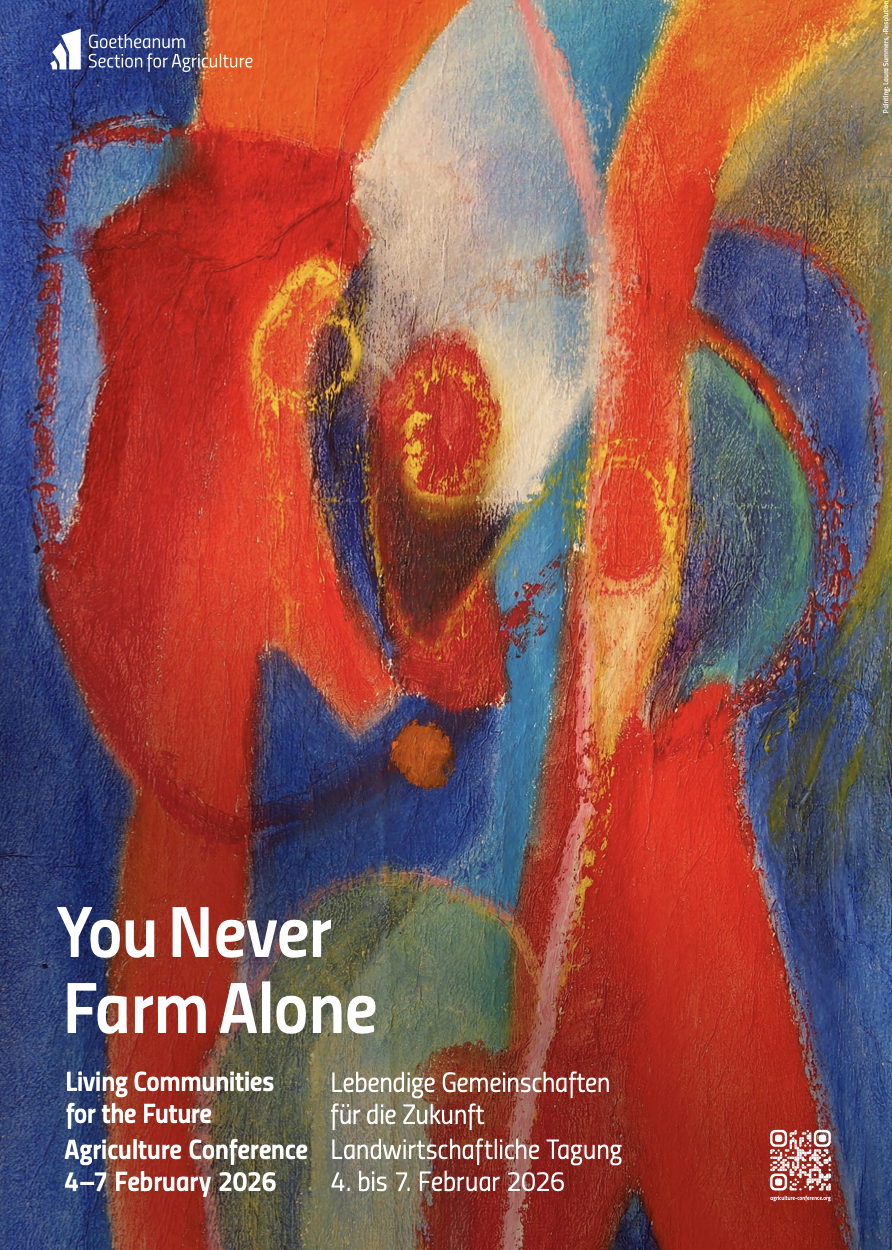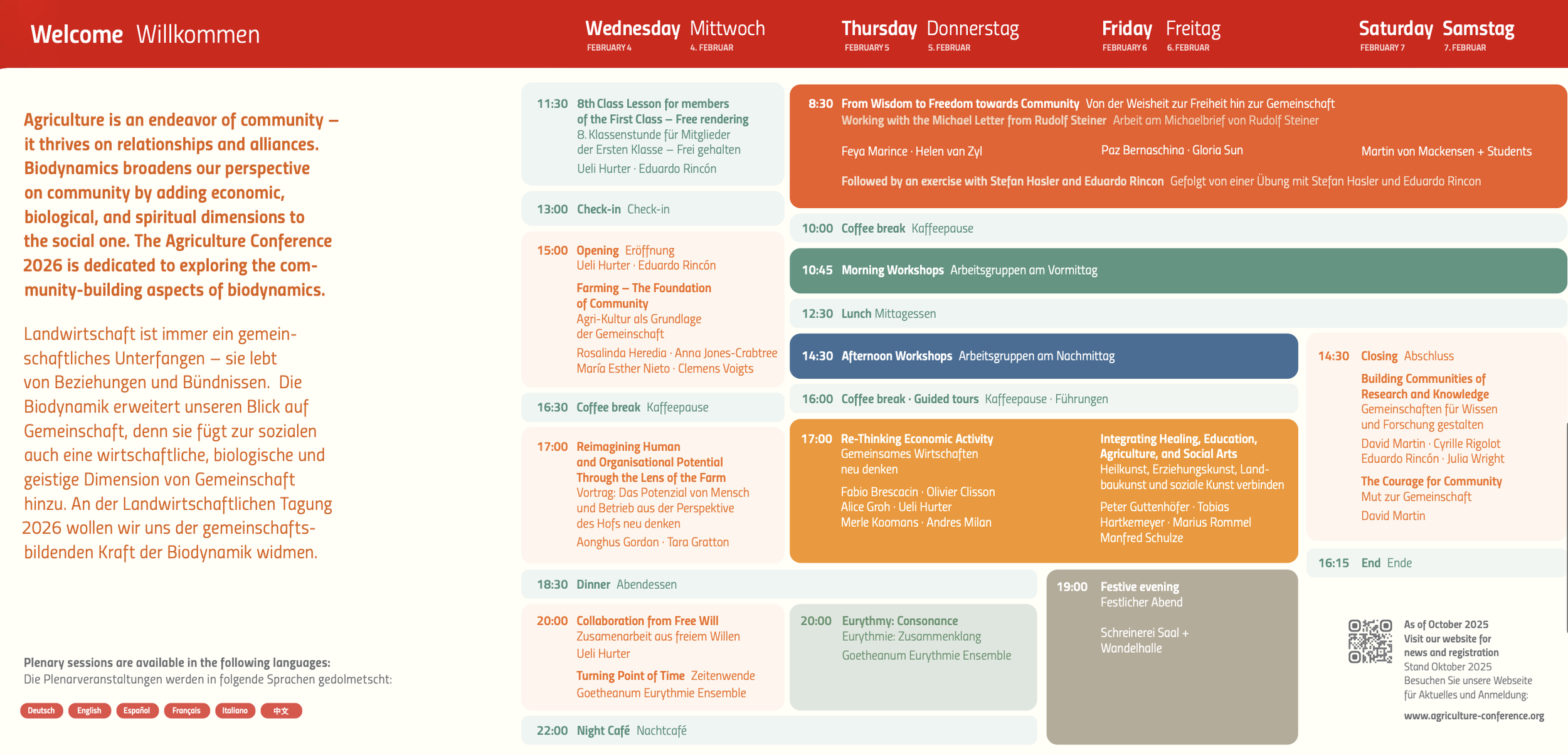
Feature on the Agriculture Conference in Dornach, Switzerland at the Goetheanum, 4–7 February 2026.
We gathered at the Goetheanum for the agriculture conference titled You Never Farm Alone, and I left feeling that what was being cultivated was not only agriculture, but relationship and a praxis of courage. Approximately 750 people came from every continent, yet the gathering felt intimate. Each morning began with Michael Letters readings, conversation, and a strengthening eurythmy practice with Stefan Hasler and Eduardo Rincon. In anthroposophic terms it felt like the “I” learning to stand inside community, without losing warmth. On one of the last evenings we all joyfully danced together in the large hall, which was such a delight.
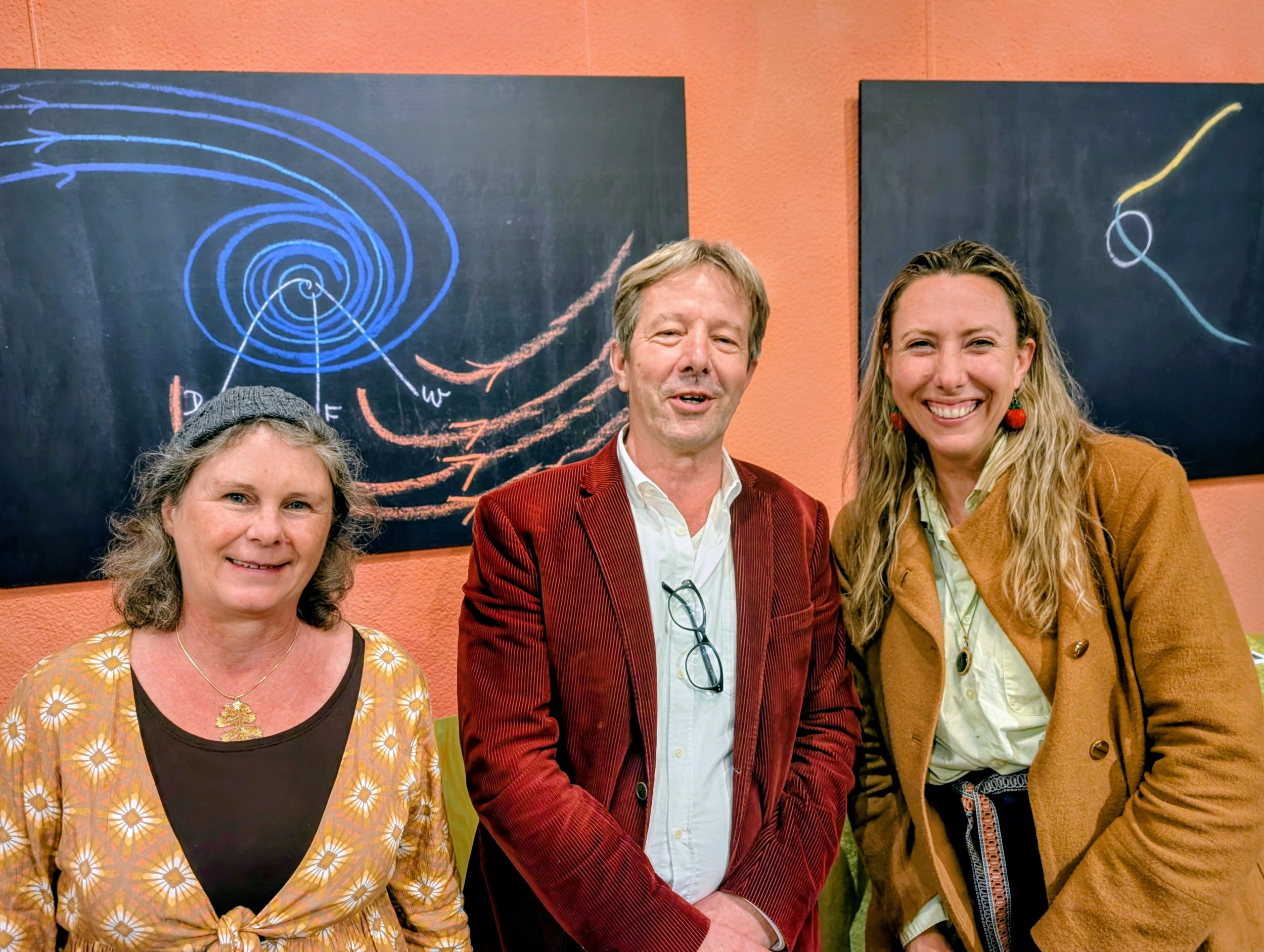
Sophia Montefiore, Ueli Hurter and Emily Samuels-Ballantyne at the Goetheanum, Switzerland, in front of Rudolf Steiner’s chalkboard drawings, an atmosphere of imagination, study, and practice. Agriculture Conference ‘You Never Farm Alone’ 2026.
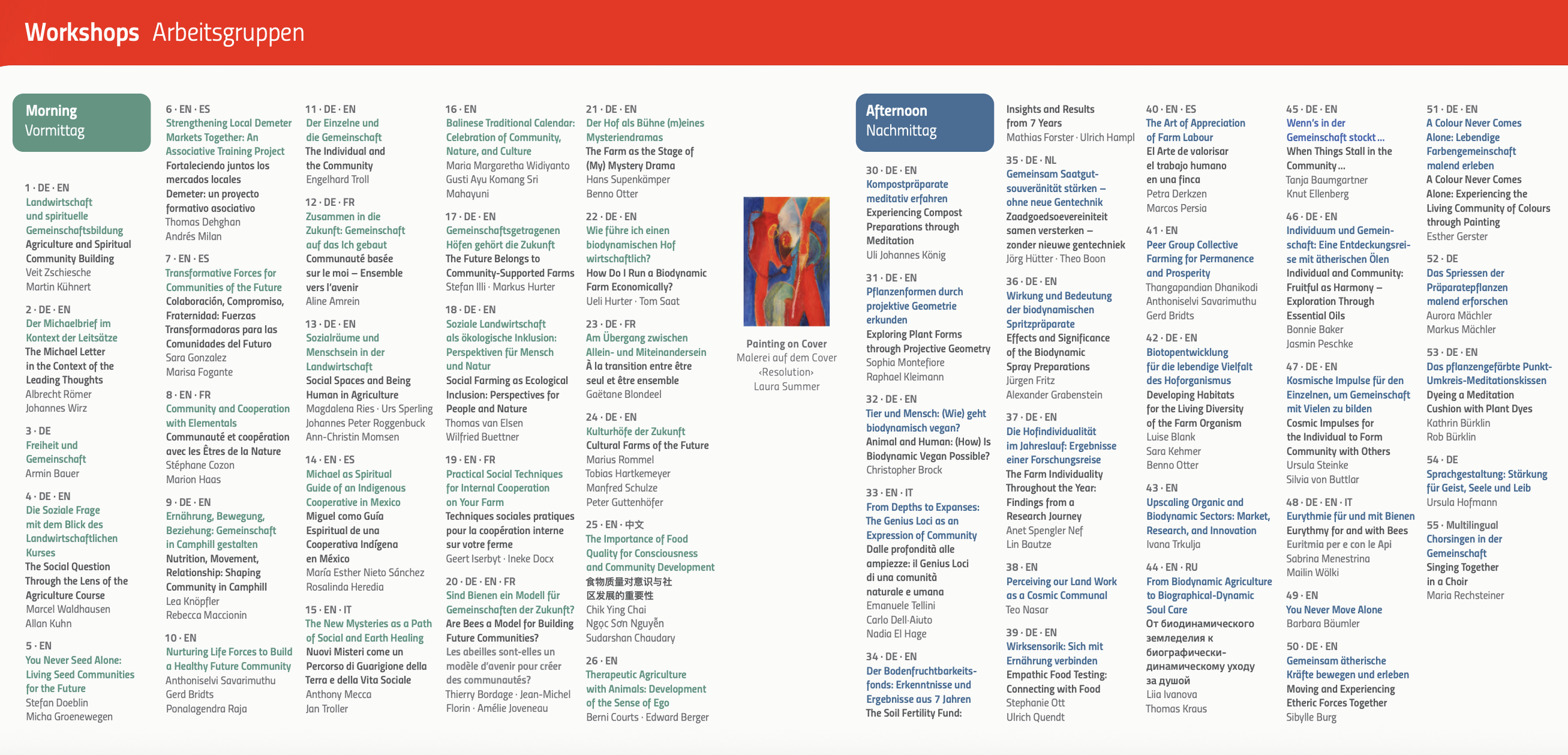
I attended the Cultural Farms of the Future workshop three days in a row throughout the conference. Its question was simple, courageous, and ambitious: how can farmland become a place where living communities are formed, where healing, education, agriculture and the social arts are integrated as one cultural organism. We spoke of farms as places that can hold learning, care, research, celebration, and good work, and we returned repeatedly to economics: how might we organise farm activity so value circulates rather than extracts, so farms can host people without burning out farmers, and so the social life around the farm becomes an organ of the farm itself.
The same group who ran the Cultural Farms workshop also led a panel titled Our Work with Life: Working with Life in Agriculture, Medicine, and Pedagogy, weaving integrative medicine, education, and biodynamic agriculture into one conversation. Berni Courts (Ruskin Mill Trust) spoke of education through meaningful work. Dr Martin-Günther Sterner brought the human organism into view, linking digestion, rhythm and immunity with social environment. Tobias Hartkemeyer (CSA farm Pente) spoke of co-responsibility and associative forms that make community agriculture real. Ruben Segers and Antoinette Simonart (De Kollebloem, Belgium) offered a living example of a farm as a cultural place where production and pedagogy belong together. The thread running through the conversation was practical reverence: life can be enriched through the farm organism.
Emily Samuels-Ballantyne in a eurythmy circle as part of the Cultural Farms of the Future workshop at the Goetheanum, during the Agriculture Section conference We Don’t Farm Alone, Switzerland. Photography by Emily Samuels-Ballantyne/Dr Demeter
Ueli Hurter, in his lecture on “Free Will,” named Collaboration from Free Will as a practical social principle: not compliance, not consensus-by-fatigue, but creating the conditions for people to choose the work. Then, when the weather turns (or a moment or situation tightens), cooperation comes as a willing and shared response rather than something forced. He drew on Kepler’s music of the spheres as an imagination for lawful relationship, and the evening concluded with the Turning of Time stanza from Steiner’s Foundation Stone Meditation: a Michaelic request to meet the present with clearer thinking and warmer hearts. In essence, technique alone won’t meet the future of agriculture; what is required is a new warmth and truthfulness between people, and this takes Michaelic courage to discover.
After Ueli’s lecture I found myself in conversation with Eduardo Rincon and turning to a small, almost disarmingly simple gesture inspired by Ueli’s lecture: to make a cup of yarrow tea! I was seeking to give his talk a Keplerian imagination through this simple idea. This Keplerian imagination is a way of perceiving that seeks the lawful relationships at work within both the cosmos and the commonplace, and trusts that these relationships can be consciously participated in, somewhere tangible to rest.
If harmony is experienced as right relationship, then we require simple, repeatable gestures that tune the human being toward listening. Yarrow offers such a gesture. As a plant long associated with boundaries, mediation, and weaving, it works quietly with the organs of the body. Likewise as we know it is quite an integrator in bio-dynamics practices for the soil and the overall farm organism. In the human experience, by steeping, waiting, and drinking, one practises a different tempo, less reaction, more receptivity; less assertion, more attunement.
In the old language of correspondences, yarrow carries a Venus quality: the principle of relationship, balance, and heart-centred communication. Through such a plant, the planetary is not abstract but intimate. The cosmos is not elsewhere; it is participating. And so a simple cup of tea becomes a way of inviting lawful order, warmth, coherence, reciprocity, into the shared field of human conversation and experiences. In this way, plants are not passive background to human development, but living partners in our co-evolution, quietly shaping the conditions through which we refine perception, relationship, and consciousness.
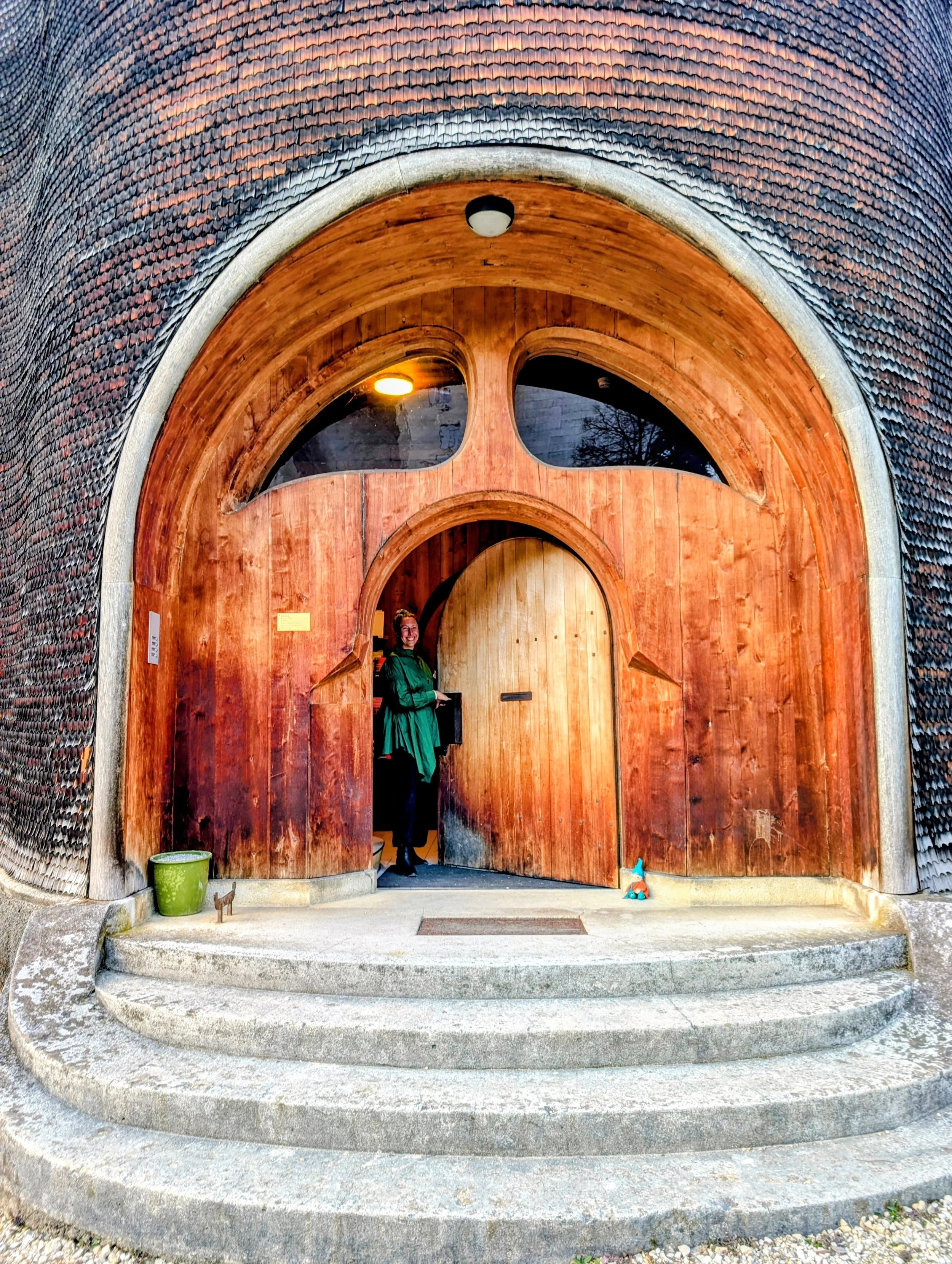
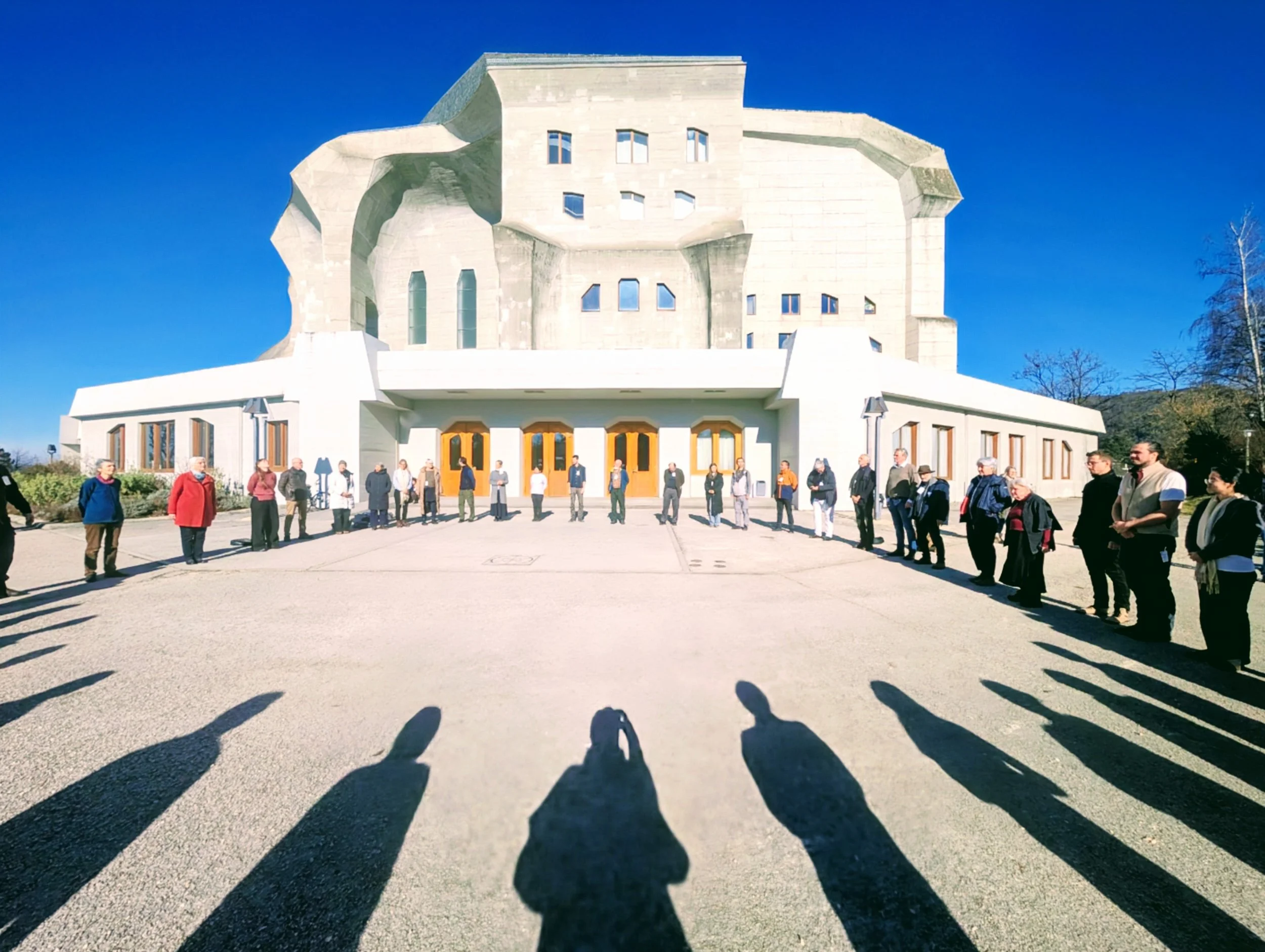
Emily Samuels-Ballantyne at the Agriculture Section front door ‘double dome’. Photography by Evelyn
Insight and reflection questions for readers in Tasmania and beyond:
Where in your region could a cultural farm take root, not as a venue, but as a living place for learning and healing?
What would it mean to design a farm gate as a civic doorway?
Which institutions could become allies, and which habits of control would need to soften into trust?
What would you change if your measure of success included soil, children, elders, microbes, and local stories?
Who are your collaborators from free will, and how will you care for those relationships when pressure rises?
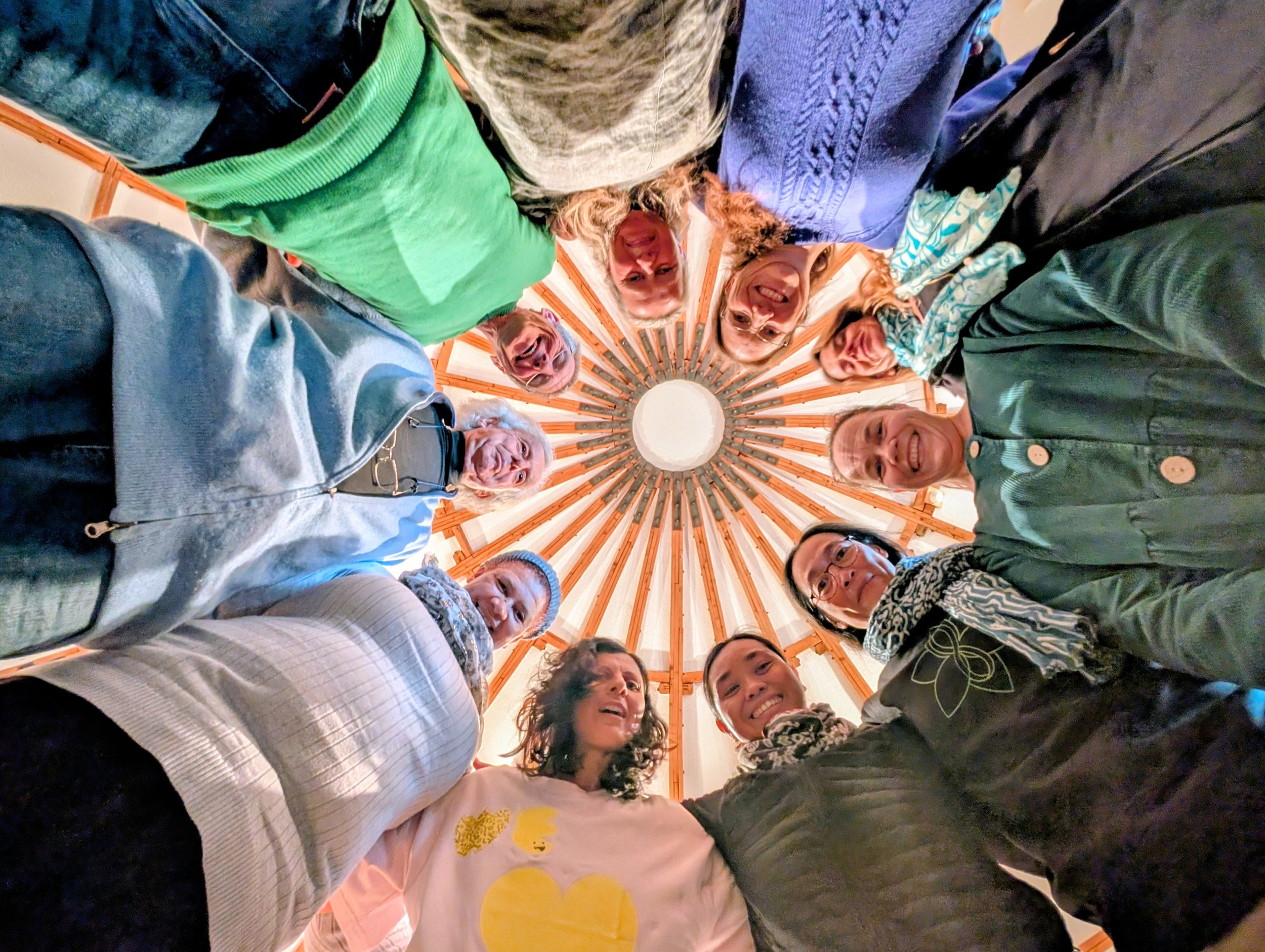
Sevenfold Learning Course Participants at the Agriculture Section building, Photography by Emily Samuels-Ballantyne
Next year’s conference will focus on the biome and nutrition, and I return to our island with renewed impulse: to weave festive agriculture and convivial farming into life, so more people can access biodynamics and culture can be reinvigorated through land connection, one honest relationship at a time. May this impulse become practice in homes, councils, and markets.
With life ‘Con Viv’ and Love,
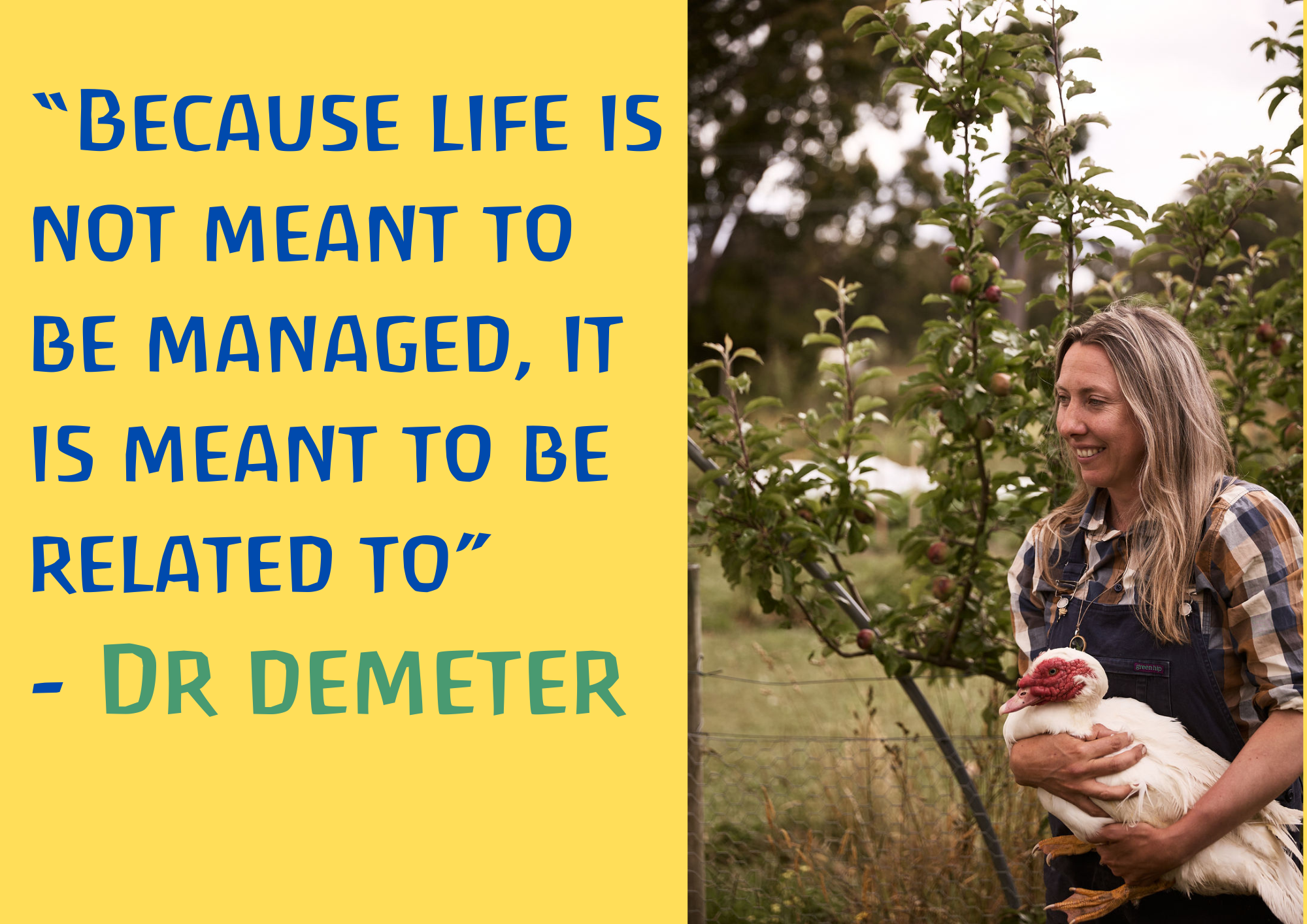
Dr Demeter
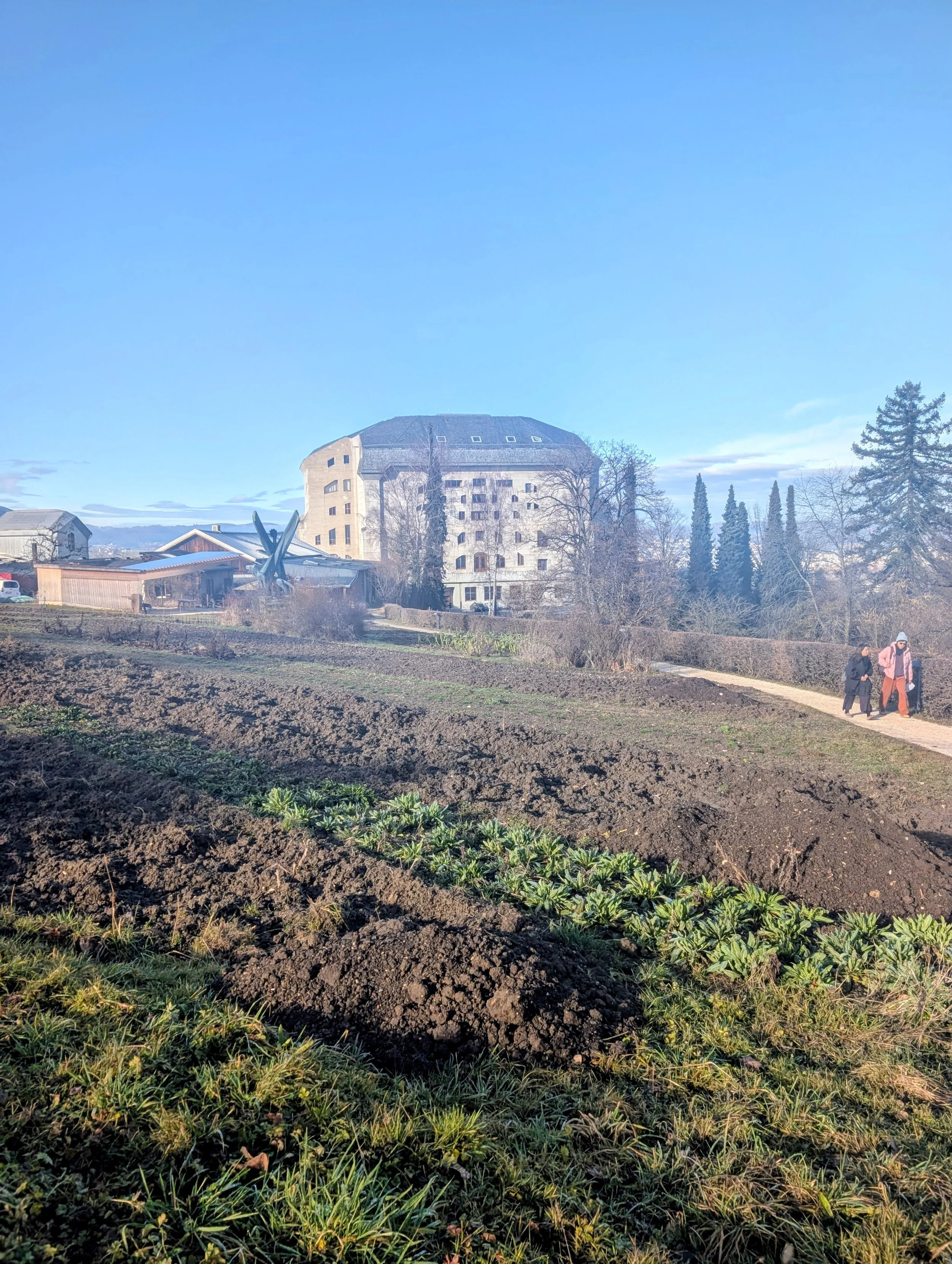
The BD Farm in the foreground, the new preparations storage building and the Goetheanum in the background. Photo: Emily Samuels-Ballantyne