There is a kind of leadership that faces outward with fire and certainty, yet forgets to turn and listen to the quiet, generative depths from which real authority arises. When power fixes its gaze only on what can be counted, traded, and controlled, it begins to sever itself from the living sources that sustain it. Decisions become fast and impressive, yet increasingly detached from consequence. The wheel keeps turning, and beneath the appearance of progress the subtle infrastructures of life such as soil fertility, trust, culture, and care, are gradually worn away. What disappears first is rarely visible on a balance sheet, yet it is precisely what makes any economy possible. When movement is oriented toward these deeper foundations, motion becomes a force of renewal.
“Is this a movement about subtle but profound movement?”
Con Viv names this re-orientation. It is a simple way of seeing the living whole and acting from within it. Rather than separating economy, ecology, and culture, Con Viv understands them as one shared field of life. Leadership, in this light, is not command over parts but care for relationships of all kinds.
This is nowhere more visible than in our food systems. Policy after policy treats food as production, land as asset, seed as property, and farmers as operators in a global chain. Life is translated into price signals and logistics; yield stands in for nourishment, efficiency stands in for relationship, and the shared ground of life is enclosed by the language of markets.
Through a Con Viv lens, this is a narrowing of perception. Food is not a unit of output but a living meeting: soil, sun, water, labour, memory, and care arriving together each day on the table. When decisions recognise this interconnectedness, they shape the conditions for life to flourish. The work before us is to recover a clear perception of what food actually is, and to let policy grow from that perception.
Seen with this clarity, a farm is an organism: a living conversation between earth and sky, human intention and ecological process. Con Viv invites governance to become the art of strengthening coherence. Health arises when parts serve the whole and the whole nourishes the parts.
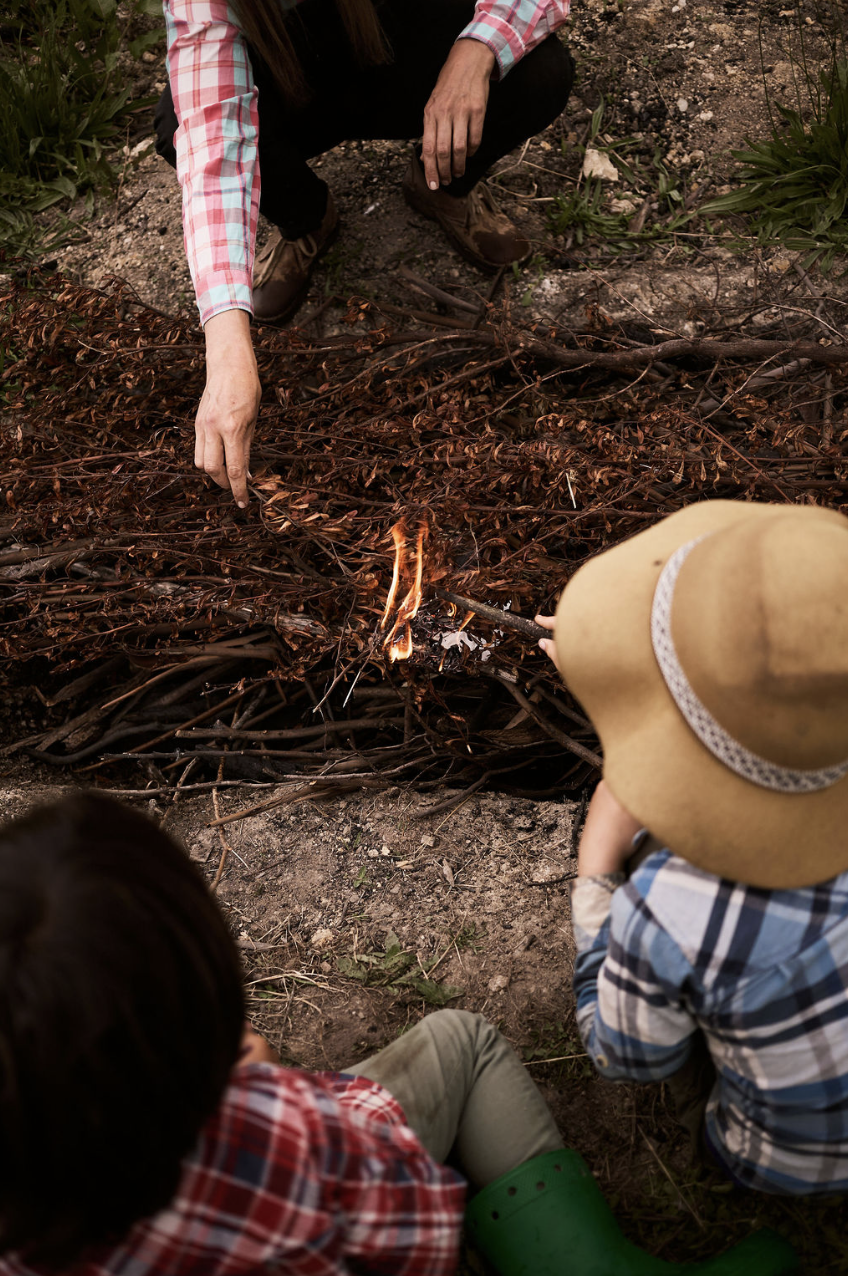
by Ness Vanderburgh Photography
From this vantage, the commodification of life appears as a thinning of reality. It values exchange while overlooking relationship, and ownership while overlooking stewardship. A different way opens when policy cultivates resilient, place-based food webs grounded in living landscapes and communities. This is Con Viv in practice: cultivating the conditions in which life can live well together.
This is also the spirit of Grow Small Feed All: directing support toward many small and medium farms, shortening supply loops, renewing regional processing, and rooting procurement in place. Diversity in landholders becomes diversity in crops, diets, and livelihoods, and risk is shared across a vibrant mosaic of producers. Here, economy is not extracted from place but circulates within it.
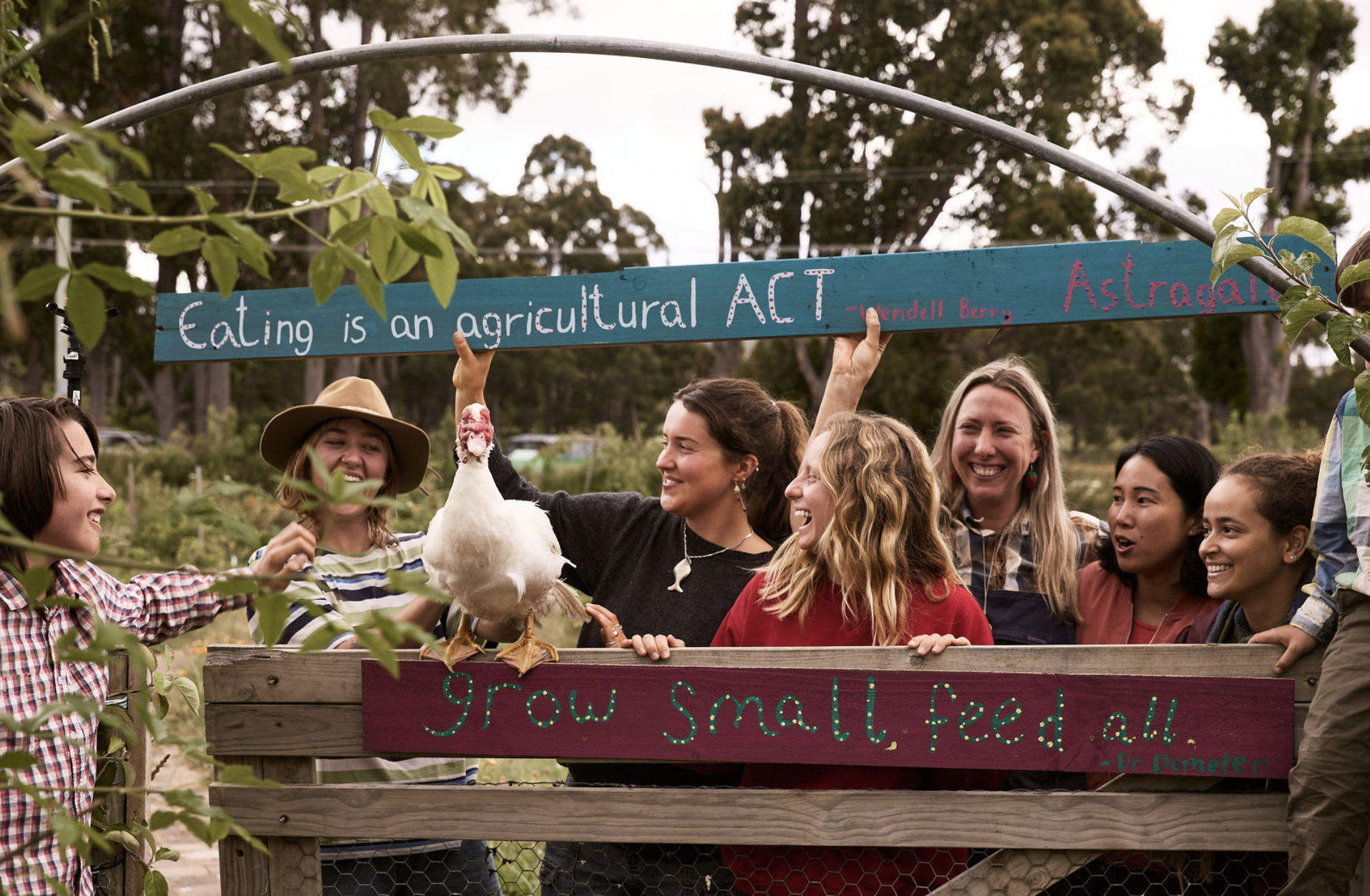
By Ness Vandeburgh Photography. Grow Small Feed All Campaign’ by Regen Era Design Studio
For me these ideas are grounded daily at Magical Farm Tasmania, where nothing thrives alone. Compost is community, pollination is partnership, water is memory moving through soil. Con Viv is not an abstract framework here but a daily practice. Policy becomes as practical as saving seed, keeping hedgerows, and opening pathways for young growers. Writing from this place is a laying of an inner foundation stone: thinking rooted in observation, feeling deepened into reverence, and willing expressed as steady, practical care - our 600 million dollar policy redirection has been seeded from these foundations.
From that ground, family, farm, and community form one field of responsibility. Decisions in the paddock echo at the kitchen table, the town meeting, and the policy page. In Con Viv terms, authority grows through relationship and coherence, not scale alone.
Gathering with others under the theme “You Never Farm Alone” gives language to this lived truth: autonomy and interdependence move together. A region stands in its own integrity while participating in a wider living exchange. Reciprocity becomes the organising principle, and isolation gives way to belonging.
Policy shaped from this foundation treats soil fertility as a public good, honours farmers as cultural practitioners, circulates finance locally, and measures success in biodiversity, nutrition, and belonging. These are not alternative indicators but truer ones, aligned with how living systems actually persist.
From the garden this is entirely practical. Con Viv looks like wind breaks planted for future generations, small abattoirs and mills that keep value near the land, farmer-to-farmer learning as a form of cultural renewal, school and hospital procurement that feeds regional growers, seed diversity protected as shared heritage, and regeneration rewarded as essential work.
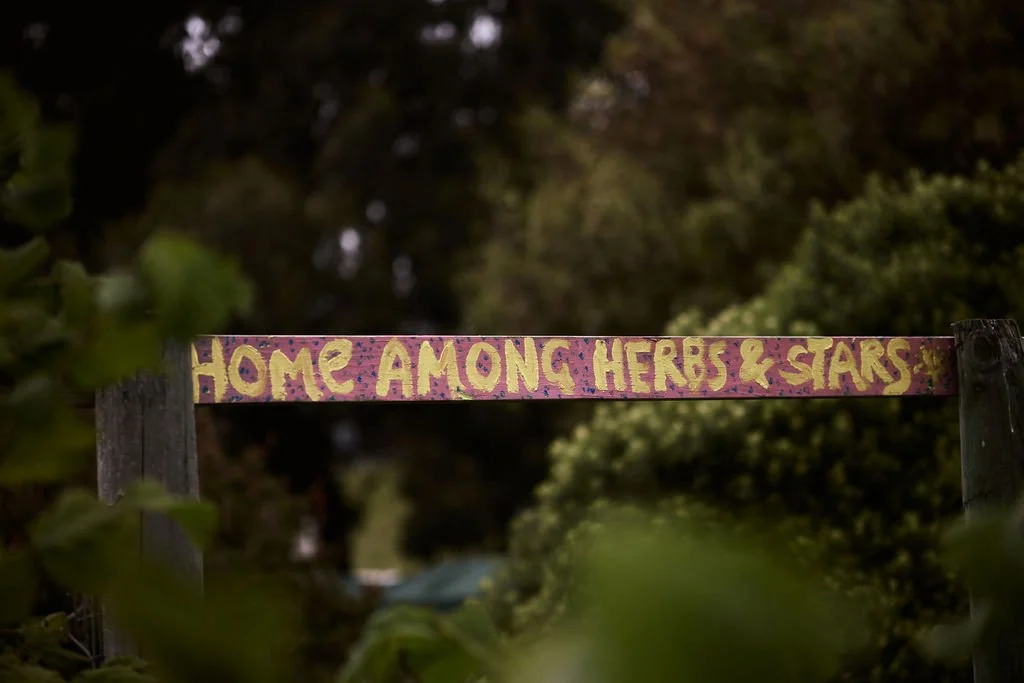
By Ness Vandeburgh Photography.
When clarity and courage meet the everyday labour of soil and seed, food becomes nourishment, land becomes place, and policy becomes care made visible. Con Viv offers a simple compass for this complexity: strengthen the relationships that make life possible.
The wheel continues to turn, but now in conscious service of life, with movement guided not by extraction but by belonging.
With Love and Con Viv!
Dr Demeter